
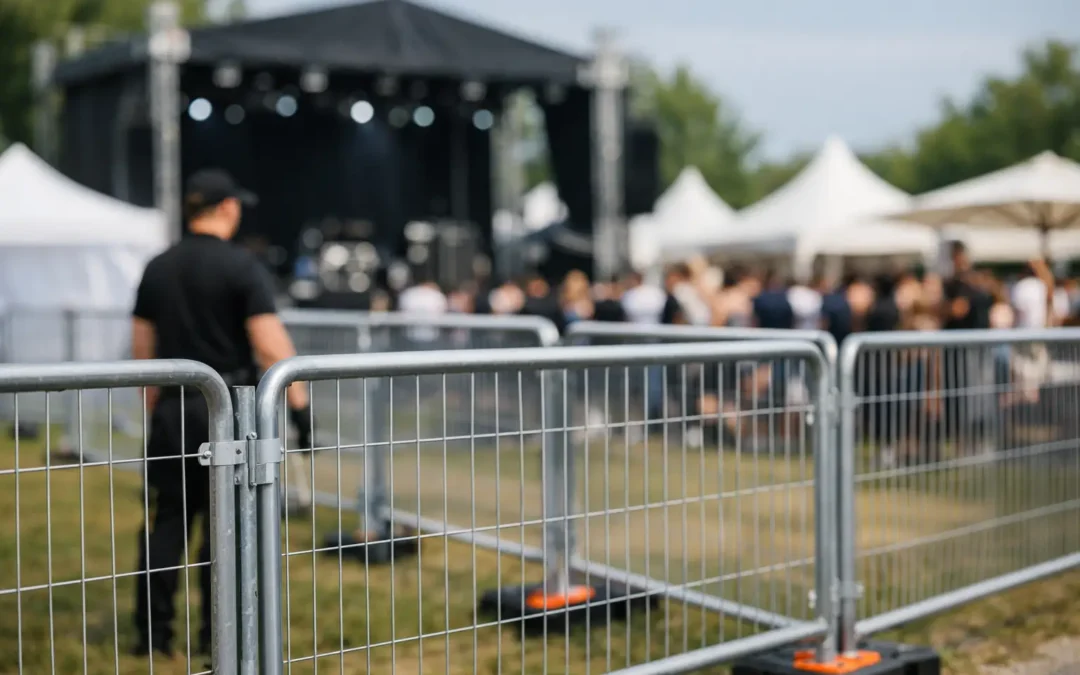
A crowded entrance can turn into a problem fast. Cars back up, pedestrians cut across places they should not, and staff end up trying to direct people by hand. That is where event fence rental makes a real difference. The right temporary fencing gives an event clear boundaries, safer traffic flow, and a more professional setup from the moment guests arrive.
For organizers, property managers, and contractors, temporary fencing is not just about putting up a barrier. It is about reducing confusion, protecting people, and keeping the site under control without committing to a permanent installation. Whether you are planning a weekend festival, managing a school function, setting up a concert space, or securing a commercial event area, the fence layout has a direct impact on how smoothly the day goes.
Why event fence rental matters more than people expect
Most event problems start at the edges. If boundaries are unclear, people park where they should not, gather in restricted areas, or enter through the wrong access point. A temporary fence system creates definition. It tells guests where to go, where not to go, and how the site is meant to function.
That matters for safety, but it also matters for perception. A well-organized event site looks prepared and professionally managed. Sponsors notice it. Attendees notice it. Staff and vendors work more efficiently when they are not dealing with avoidable access issues all day.
There is also a liability side to consider. Open sites can expose equipment, staging, utility areas, and private property to unnecessary risk. Fencing helps separate public space from operational space, which is one of the simplest ways to improve control during setup, event hours, and breakdown.
Where event fence rental works best
Temporary event fencing is useful in more settings than many people realize. Public festivals and community celebrations are the obvious examples, but they are far from the only ones. School events, church functions, sporting events, parades, fairs, outdoor sales, corporate gatherings, and private events can all benefit from clear perimeter control.
It is also a strong fit for mixed-use sites. Sometimes an event shares space with an active parking lot, a business entrance, a work zone, or neighboring properties. In those cases, fencing helps separate one activity from another so normal operations can continue with fewer disruptions.
For contractors and commercial clients, event fencing can also overlap with site security needs. If an event is being held near materials, equipment, or unfinished work areas, temporary fencing becomes part of the safety plan as much as the event plan.
What the right rental fence setup should accomplish
A good fence layout does more than surround a space. It should support the way the event actually functions. That starts with entry and exit points. Guests need clear access, but staff and vendors may need separate routes. If everyone is funneled through the same opening, delays are almost guaranteed.
The setup should also account for foot traffic patterns. A fence that looks fine on paper can still create bottlenecks if it ignores how people move once the event begins. Wide walkways, controlled queue areas, and protected staff zones all make a difference.
Visibility matters too. In some cases, the goal is security and separation. In others, the goal is crowd guidance without making the site feel closed off. It depends on the type of event, the audience, and the property itself. An experienced fencing provider can help balance control with appearance so the site feels organized rather than restrictive.
Event fence rental and security planning
Security is one of the biggest reasons clients rent temporary fencing, and for good reason. Even a short-term event can create real exposure if the site is left too open. Designated boundaries reduce unauthorized access and make it easier for staff or security teams to monitor who is coming and going.
This is especially useful when an event has ticketed entry, backstage or staff-only areas, alcohol service zones, equipment staging, or overnight setup needs. Fencing creates a structure that supports the rest of the security plan instead of leaving staff to manage the perimeter with signs and hope.
That said, more fencing is not always better. Too many barriers in the wrong places can frustrate guests and slow emergency access. The right approach is usually strategic placement, not maximum coverage. That is one reason site planning matters so much before installation day.
Temporary fencing for crowd control and traffic flow
Crowd control is often less about the size of the crowd and more about predictability. A moderate crowd with poor direction can become harder to manage than a large crowd with a smart layout. Temporary fencing helps shape movement in a way that feels natural to attendees.
Queue lines at entrances, directional lanes near ticket booths, separation around vendor areas, and barriers near restricted zones all help reduce confusion. People tend to follow the path that is easiest to understand. Fencing gives them that path.
Vehicle movement should be part of the same conversation. If vendors, staff, and guests are all arriving in the same area, fencing can help divide pedestrian space from drive lanes and loading zones. That is an important safety step, particularly at busy outdoor venues and temporary event sites.
What to consider before you rent
The first question is not just how much fence you need. It is what the fence needs to do. A small private event may only need perimeter definition and controlled access. A large public event may require crowd management, equipment protection, traffic separation, and overnight security.
Ground conditions also matter. Grass, gravel, pavement, and uneven terrain can all affect how temporary fencing is installed and stabilized. Weather matters too. Wind exposure, drainage, and seasonal ground softness can change what works best on a site.
Then there is timing. Some events need fencing only for the day itself. Others need it in place for setup, early vendor access, and post-event teardown. Renting for the full operational window usually makes more sense than focusing only on guest hours.
Local codes, permit requirements, and venue rules can also shape the plan. A dependable provider should be able to discuss practical installation issues early, before they become delays.
Why professional installation is worth it
Temporary fencing may sound simple, but event conditions are rarely simple. Uneven sites, weather shifts, access limitations, and changing layouts all affect the final result. Professional installation helps make sure the fence is stable, functional, and placed where it actually supports event operations.
It also saves time for event teams who already have enough to coordinate. Instead of trying to figure out spacing, placement, and access points on the fly, you can work from a plan that reflects the property and the event schedule.
That experience matters even more when the site has multiple uses or safety concerns. A local fencing company that understands the region, the terrain, and the demands of commercial and public-facing projects can spot issues early and recommend practical solutions. For property owners and event organizers in Fort Smith, Western Arkansas, and Eastern Oklahoma, that local knowledge is not a bonus. It is part of what keeps the project on track.
Choosing an event fence rental provider
Not every rental company approaches temporary fencing with the same level of care. Some simply drop off panels. Others look at the site, the access needs, the schedule, and the purpose of the event before recommending a layout. That difference shows up quickly on event day.
A strong provider should be responsive, clear about scheduling, and able to handle both safety concerns and appearance concerns. If your event is public-facing, the fence needs to do its job without making the venue look neglected or improvised.
It also helps to work with a company that handles more than one type of fencing project. Broad experience in residential, commercial, security, and specialty fencing often translates into better problem-solving for temporary setups. Modern Fence Company has built that kind of reputation over decades of serving the region, and it shows in the way complex projects are approached – with planning, precision, and an eye on long-term customer trust.
When event fence rental saves money
Some clients focus on rental cost and overlook the cost of not having a proper perimeter. That can show up as staff overtime, traffic confusion, property damage, safety issues, or last-minute changes that disrupt the event schedule. In many cases, fencing is one of the most practical ways to prevent expensive problems before they start.
It also allows flexibility. If your needs are temporary, renting makes more sense than installing a permanent barrier that may not serve the property after the event ends. You get the control you need for the timeframe you need, without taking on unnecessary long-term expense.
The best event sites feel calm, even when they are busy. People know where to enter, where to wait, and where not to go. Staff can focus on the event itself instead of constantly correcting movement around the property. That kind of order does not happen by accident. It starts with smart planning, and often, with the right temporary fence in the right place at the right time.