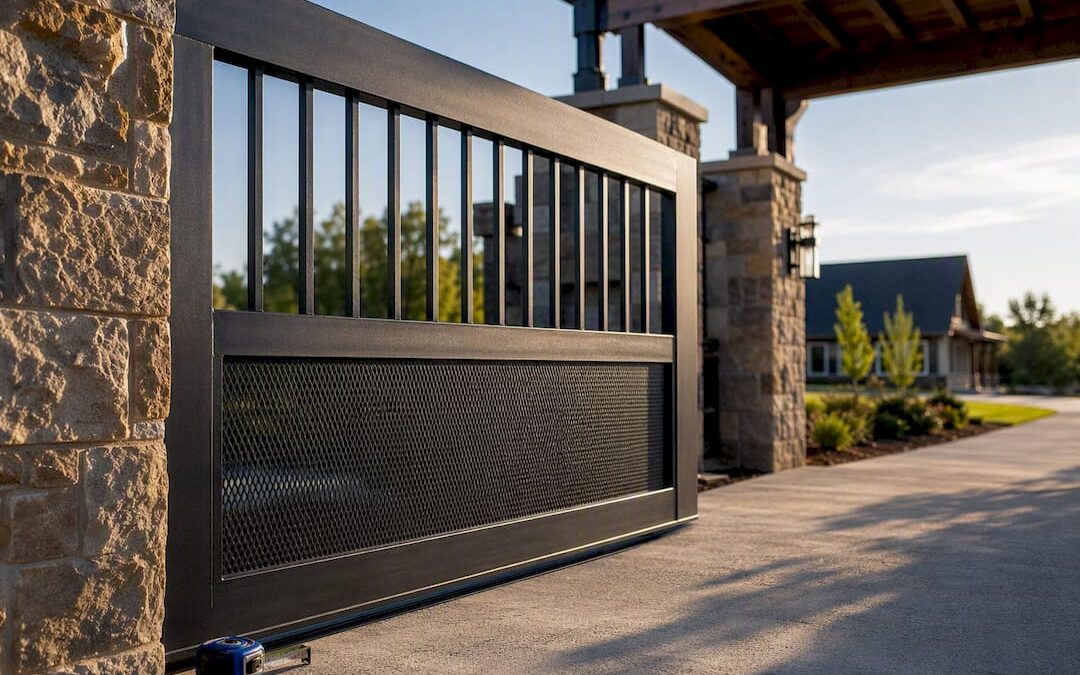
Start with the house, not the catalog. Pick a style and material that match your home’s architecture and climate, then measure the opening and request a CAD consult from a fabricator before you commit to anything. A design-first approach, backed by a real shop drawing, prevents the mismatched, bolt-on look that plagues most off-the-shelf gates.
TL;DR:
- Steel provides strength and detailed plasma cut designs but requires protective finishing to prevent rust when used outdoors.
- Aluminum is lighter and resistant to corrosion, making it ideal for coastal areas and sliding gates, but may need extra bracing for fine detailed cuts.
- Site conditions like slope and space heavily influence gate type choice, with heavy wrought iron requiring more robust hardware and proper foundation support.
- Complex decorative details, such as intricate plasma-cut artwork, increase fabrication time and cost due to additional programming and structural requirements.
- A thorough initial consultation with clear measurements, site photos, and material preferences ensures accurate quotes and reduces revision rounds.
Table of Contents
- What Are the Most Popular Custom Driveway Gate Designs?
- How Do CNC Cutting and Mixed Materials Create Unique Gate Designs?
- Which Material and Gate Type Should You Choose?
- What Does a Custom Driveway Gate Cost, and How Long Does It Take?
- How Do You Automate and Secure a Custom Gate?
- How Does a Professional Fabricator Handle a Custom Gate Project?
- Why a Design-First Custom Gate Outperforms an Off-the-Shelf Kit
- Ready to Design Your Custom Gate? Here’s How Modernfence Builds It
- Sources
What Are the Most Popular Custom Driveway Gate Designs?
The biggest mistake homeowners make is picking a gate they like in isolation, without checking it against the house behind it. A gate is the first thing anyone sees before they see your home, so its lines, materials, and scale need to echo what is already there.
Modern gates favor clean horizontal lines, minimal ornamentation, and often a mix of solid aluminum panels with negative space. They pair naturally with contemporary or mid-century homes and flat or low-slope rooflines.
Farmhouse gates lean on vertical wood or metal pickets, sometimes an X-brace pattern, and a slightly rustic finish. They suit properties with board-and-batten siding, gable roofs, or working acreage.
Ranch-style gates tend to run wide and low, often with horizontal rail patterns that mirror split-rail or pipe fencing already on the property.
Ornamental or wrought iron gates bring scrollwork, finials, and heavier visual weight, which fits Colonial, Tudor, or traditional brick homes better than a stripped-down modern build.
Privacy panel gates use tightly spaced boards or solid inserts, usually chosen by homeowners who want screening from the street as much as curb appeal.
A few practical steps make the design process faster and more accurate:
- Photograph your home’s front elevation straight on, plus close-ups of any existing fencing, trim, or column details.
- Measure the driveway’s clear width and note any slope across the opening.
- Note the color and material of your house’s roof, siding, and existing hardscape so the fabricator can match tone.
- Flag any landscaping, mailbox, or utility boxes near the gate location that could affect swing or slide clearance.
Homeowner idea galleries like Pinterest’s driveway gate boards are useful for gathering visual references, but treat them as a starting point for conversation with a fabricator, not a final spec. A photo tells a designer what you like. Measurements and site photos tell them what will actually work.
How Do CNC Cutting and Mixed Materials Create Unique Gate Designs?
Custom fabrication today relies on a handful of techniques that let a shop turn a sketch or reference photo into a gate nobody else on your street has. Understanding what each one does helps you ask for the right thing and budget accurately.
CNC and plasma cutting use a computer-guided torch or cutter to slice detailed silhouettes directly out of heavy-gauge steel or aluminum. This is how fabricators produce wildlife scenes, tree lines, family monograms, or estate initials as a continuous metal panel rather than an applied decal. Plasma-cut gate designs can render remarkably fine detail, though finer detail generally means thinner cut lines, which can affect the panel’s rigidity if the design isn’t engineered with enough structural bridging between cutouts.
Laser cutting achieves similar results with tighter tolerances, usually on thinner material, and works well for smaller decorative inserts rather than full structural panels.
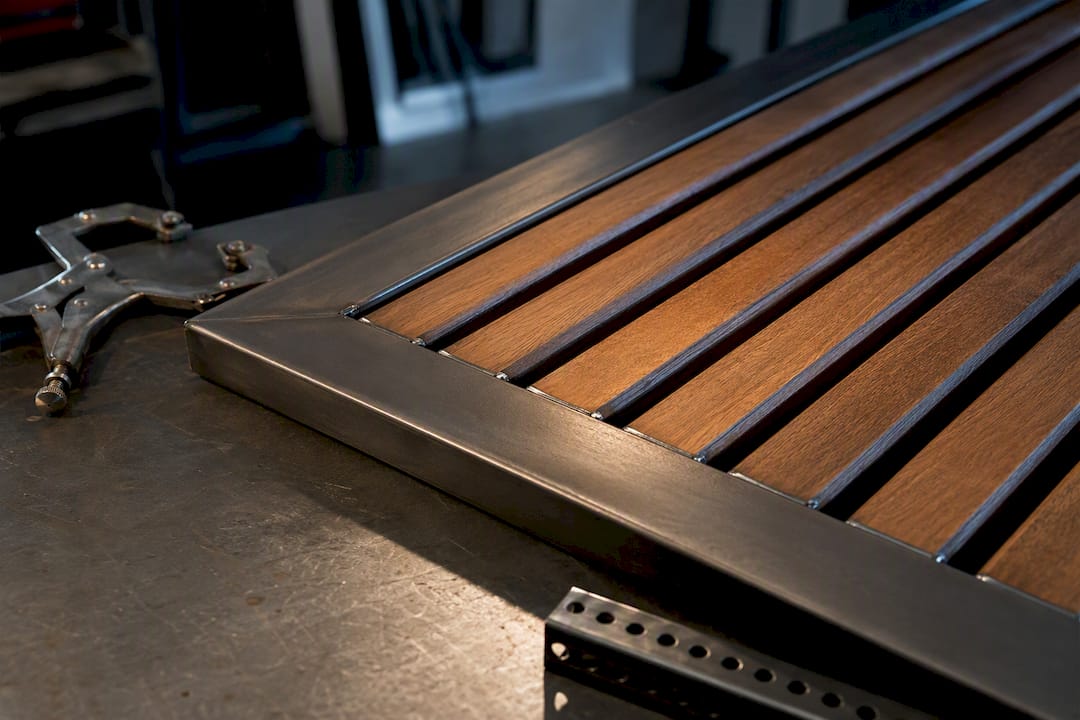
Mixed-material builds combine a welded metal frame with wood slat infill, glass panels, or perforated privacy screens. Fabricators favor this approach for farmhouse and ranch styles because it lets the frame carry the structural load while the infill delivers the texture and warmth that pure metal can’t.
Integrated signage works the same way as any other cutout design; a house number, family name, or ranch brand gets built into the panel itself during the CNC or plasma process rather than bolted on afterward.
To get from an idea to a build-ready file, most shops need:
- A clear reference photo or hand sketch of the design concept.
- Any specific text, monogram, or logo you want incorporated, in its exact spelling and font preference.
- Rough dimensions of the panel area where the design will sit.
Pro Tip: Send your reference image at the highest resolution you have. A blurry phone screenshot of a logo makes it much harder for a designer to trace clean vector lines, which can add a revision round to your timeline.
Which Material and Gate Type Should You Choose?
Material and gate type aren’t separate decisions. Each material carries a different weight, and weight determines which gate types and hardware are realistic for your site.
- Steel offers the most strength per dollar and holds intricate plasma-cut detail well, but it rusts without proper protection. A quality powder-coat finish or galvanized undercoat is not optional for steel gates left outdoors year-round.
- Aluminum weighs far less than steel and resists corrosion naturally, which makes it a strong pick for coastal or humid climates and for sliding gates where reduced weight eases motor strain. It won’t hold as fine a plasma-cut detail as steel without added bracing.
- Wrought iron delivers the heaviest, most traditional look and can last generations, but it demands the most ongoing maintenance if the finish is scratched or chipped.
- Wood inserts add warmth and texture but require sealing on a regular schedule, especially set against a metal frame that expands and contracts differently in heat.
Gate type follows from the site itself more than from style preference. A swing gate needs enough flat, level driveway on the inside to clear its full arc without hitting a slope or landscaping. A sliding gate needs a straight run of fence line beside the driveway to travel along, either on a ground track or a cantilevered system that avoids one entirely. A bi-fold gate splits the panel in half to swing open in a tighter footprint, useful when the driveway is short but still needs full clearance. Site conditions like slope, racking, and swing radius usually decide gate type before style does. Material and gate type together also set the hardware spec: a heavy wrought iron swing gate needs a far more robust hinge and a stronger opener than a lightweight aluminum slider.
What Does a Custom Driveway Gate Cost, and How Long Does It Take?
Custom gate pricing spans a wide range because so many variables stack on top of each other: overall size, material choice, art complexity, and whether you’re adding automation.
A straightforward semi-custom design in steel or aluminum sits at the lower end of the range. Add plasma-cut artwork, mixed materials, or wrought iron detailing, and the price climbs. Automation and the electrical work it requires (running power to the gate location, installing an opener, wiring safety sensors) adds a separate line item on top of the gate itself, often a significant fraction of the total project cost.
Statistic Callout: Complex plasma-cut artwork increases both fabrication time and cost compared with a simpler geometric panel, since detailed cutouts require more programming and cutting time and often need extra structural bracing to stay rigid.
Before ordering, walk through this checklist:
- Check your HOA covenant or local permit office; some municipalities require a permit for anything involving new electrical service or a structure over a certain height.
- Confirm the site has (or can get) power routed to the gate location if you’re automating it.
- Verify post or pillar foundations are sized for the gate’s actual weight, not just its footprint.
- Measure the clear opening at both the top and bottom of the driveway, since slabs settle unevenly over time.
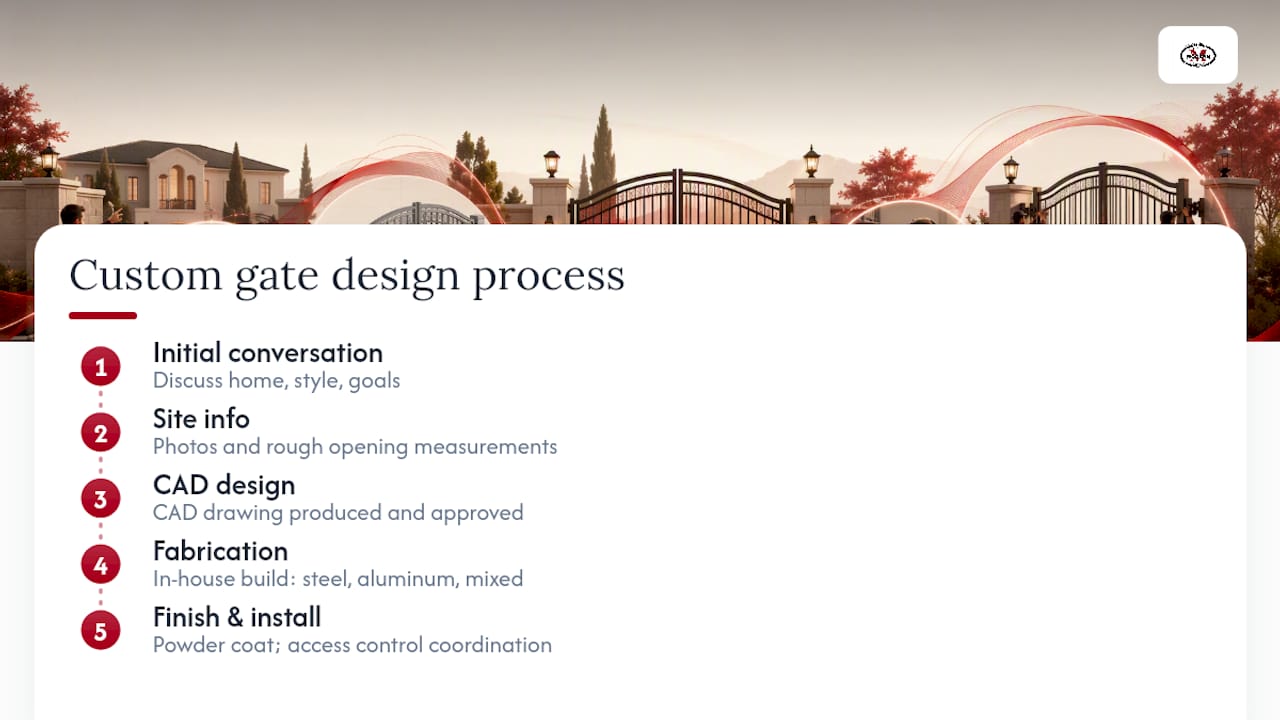
Timeline typically runs through five stages: initial consult, CAD drawing and approval, fabrication, finish application, then installation coordination. Design and fabrication lead time for a genuinely custom piece commonly runs several weeks to a few months, depending on complexity and the fabricator’s current shop load.
How Do You Automate and Secure a Custom Gate?
Automation choice follows directly from the gate type and weight you’ve already settled on. A heavy swing gate, especially wrought iron or thick steel, generally needs a ram or articulated arm opener built to handle that load. A sliding gate typically pairs with a track-driven or cantilever operator, and cantilever systems are worth considering specifically because they avoid a ground track that can catch debris or ice.
Beyond the motor, access control is where a custom gate earns its keep day to day:
- A keypad lets you assign codes to family, staff, or delivery services without handing out a physical remote.
- A wireless remote or vehicle sensor works well for frequent, predictable entry.
- An intercom or camera system lets you screen visitors before opening, which matters more for security-focused installations than for a purely decorative gate.
- Smart Home integration lets you open the gate from a phone app, useful for remote properties or rental management.
Photo-eye sensors and auto-reverse functions aren’t optional extras; they’re standard safety features that stop a gate before it closes on a vehicle, pet, or person, and most jurisdictions expect them on any automated residential gate. Coordinate with a licensed electrician early, since running conduit and power to a gate post is easier to plan before the post foundation gets poured than after. For a deeper look at matching openers to gate weight, Modernfence’s automatic gate options guide breaks down the tradeoffs in more detail.
How Does a Professional Fabricator Handle a Custom Gate Project?
A reputable shop runs a custom gate through the same five stages every time, and knowing that sequence helps you evaluate whether a fabricator you’re vetting actually operates that way. The process typically moves from an initial consult, where you share photos and rough measurements, into a CAD drawing you review and approve before any metal gets cut. Fabrication happens in-house, followed by a finish stage (powder coat, galvanizing, or paint), and finally installation coordination once the panel is complete.
When you’re comparing proposals, ask for specifics rather than taking a sales pitch at face value:
- Request a sample CAD drawing or shop drawing style so you know what your own approval document will look like.
- Ask what material gauge and finish system they specify, and get it in writing.
- Ask about warranty terms on both the fabrication and the finish separately, since powder coat and structural welds can carry different coverage.
- Check whether welders hold certifications tied to standards from a body like the American Welding Society, a reasonable proxy for weld quality on a heavy gate.
Pro Tip: Send your fabricator the gate opening’s width, the pillar or post material, and a few site photos before your first call. It shortens the estimate process and gets you a more accurate number on the first pass instead of a rough placeholder quote.
Reading vendor feedback on a platform like Trustpilot can also flag red flags in ordering experience or communication before you sign anything.
Why a Design-First Custom Gate Outperforms an Off-the-Shelf Kit
A gate bolted onto an opening it was never drawn for always looks slightly wrong, even to people who couldn’t say why. Design-first fabrication fixes that by working from your home’s actual lines, which pays off twice: fewer retrofit headaches during installation, and a stronger resale impression since buyers register mismatched hardware even when they don’t consciously notice it. The tradeoff is real. Custom work asks for a clearer warranty conversation and a maintenance habit, but that’s a fair price for something built to fit your property instead of the average driveway.
— mark
Ready to Design Your Custom Gate? Here’s How Modernfence Builds It
Modernfence has spent more than 70 years fabricating gates and metalwork for homeowners and businesses across Western Arkansas and Eastern Oklahoma, and every custom driveway gate design starts the same way: a real conversation about your home, not a catalog page.
Bring photos of your driveway and house front, rough measurements of the opening, and any style references you’ve collected. Modernfence’s team works from those to produce a CAD drawing you approve before fabrication starts, whether the project calls for plasma-cut steel, marine-grade aluminum, or a mixed-material build with wood inserts. Remote projects work the same way; send dimensions and site photos, and the design process moves forward without a site visit required at every step. The shop handles fabrication in-house, finishes every gate with a corrosion-resistant powder coat, and coordinates access control and opener installation for automated projects through its own metal fabrication and access control teams.
If you’re ready to move past inspiration boards and get real numbers, request a CAD consult and estimate through Modernfence’s fence installation guide or reach out directly to start the conversation.
Sources
For more detail on materials, styles, and fabrication methods covered here, these resources are worth a closer look: The Spruce’s driveway gate idea roundup, JDR Metal Art’s plasma-cut gate gallery, Aberdeen Gate’s architectural gate portfolio, and design inspiration from One Day Doors & Closets on entrance proportions.