
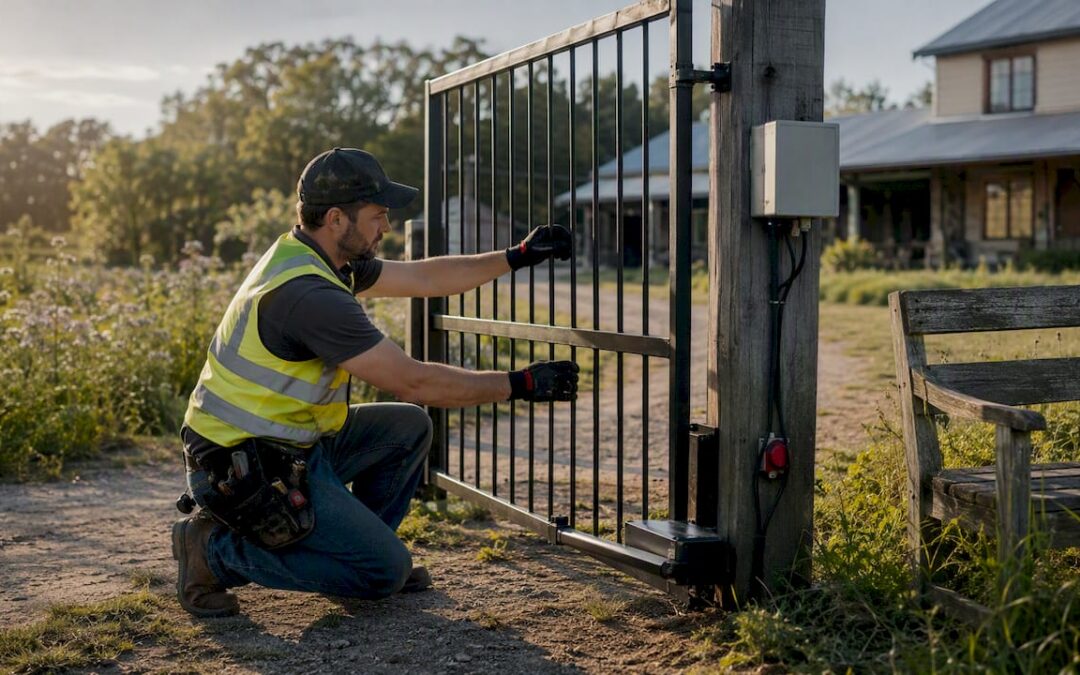
Most gate repairs in the United States commonly fall within a moderate cost range, depending on what broke and how complex the fix is. Minor issues like sensor adjustments or a faulty remote battery sit at the low end. Replacing a motor or control board pushes the cost considerably higher. Here are four common line items to orient your budget:
- Sensor alignment or adjustment: a typical low-cost fix
- Hinge or latch repair: generally a moderate-cost job
- Motor replacement (operator unit): can be a higher-cost repair
- Full automatic gate opener replacement: usually the most expensive option
The quick verdict: if your gate system is under 10 years old and only one component has failed, repair almost always makes financial sense. When the system is 15 years or older, or when the motor and control board are both failing at the same time, replacing the operator outright typically costs less over the next five years than stacking repairs.
| Repair Type | Typical Cost Range | Notes |
|---|---|---|
| Sensor alignment | $75–$150 | Often the lowest-cost fix |
| Hinge/latch repair | $175–$750 | Wood and iron vary by weight |
| Motor repair | $300–$600 | Labor-intensive; brand affects parts cost |
| Control board replacement | $300–$1,500 | Wide range by system brand |
| Full opener replacement | $1,200–$3,800 | Includes parts and installation |
Table of Contents
- How does gate type and material change your repair cost?
- What do common gate repairs actually cost, line by line?
- What drives gate repair prices up or down?
- Safe checks to try before you call a technician
- Repair vs. replacement: how do you decide?
- What to ask before you hire a gate repair professional
- Technician tips from Modernfence on preventing costly repairs
- Key Takeaways
- The real cost of waiting on gate repairs
- Modernfence can handle your gate repair from diagnosis to done
- Sources and methodology for the estimates in this guide
How does gate type and material change your repair cost?
Gate type and material are two of the biggest variables in any repair estimate. A lightweight vinyl pedestrian gate and a heavy commercial rolling steel gate may share the same broken sensor, but the labor time, specialty tools, and parts cost are completely different.
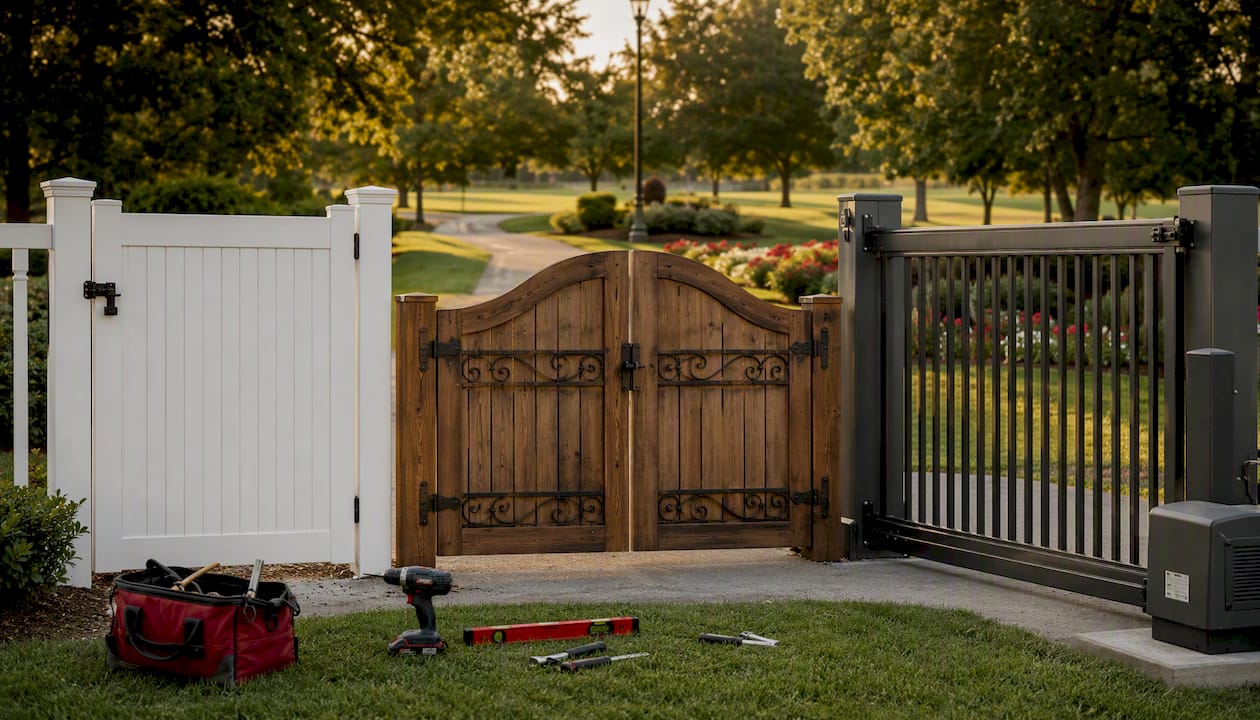
| Gate Type / Material | Common Repair | Typical Cost Range | Why It Varies |
|---|---|---|---|
| Wood swing gate | Hinge replacement, sag correction | $150–$500 | Wood weight, rot damage, post condition |
| Iron/steel swing gate | Weld repair, hinge, realignment | $200–$600 | Welding labor, rust treatment |
| Vinyl gate | Panel repair, latch | $100–$300 | Fewer weld needs; parts availability |
| Chain-link gate | Frame straightening, latch | $100–$300 | Lower material cost |
| Sliding gate (residential) | Roller/track, motor | $250–$900 | Track alignment is labor-intensive |
| Commercial rolling gate | Motor, spring, track | — | Heavy-duty parts, commercial labor rates |
| Pedestrian gate | Latch, hinge, closer | $75–$300 | Simpler mechanics |
Iron and steel gates tend to cost more to repair because welding is often required. A cracked weld on a wrought iron swing gate, for example, needs a certified welder on-site, which adds $50–$100 per hour beyond a standard gate technician’s rate. Iron fence installation uses heavier hardware throughout, so replacement hinges and posts are priced accordingly.
Commercial rolling gates carry the highest repair costs across the board. The springs alone on a heavy rolling gate can cost $200–$600 to replace, and the motor units are industrial-grade, meaning parts are not off-the-shelf items. A property manager overseeing a commercial lot should budget at the higher end of every range listed above.
What do common gate repairs actually cost, line by line?
Breaking the automatic gate repair cost into specific components helps you read a quote accurately and spot where a technician’s estimate seems out of line.
- Photo-eye sensors (pair, installed): $250–$450. Cost rises when wiring needs to be re-run or when the sensor mounting brackets are corroded and need replacement.
- Remote or keypad replacement: $100–$300. A basic remote is inexpensive; a full keypad with access-code programming costs more, especially on commercial systems. For a deeper look at keypad and intercom options, the access control systems guide covers what to expect from different setups.
- Hinge replacement (swing gate): $175–$750 installed. Heavy iron gates with weld-on hinges sit at the top of that range.
- Roller and track repair (sliding gate): $200–$600. Debris-packed tracks that have bent or warped require more labor than a simple roller swap.
- Motor repair: $300–$600. Partial motor repairs, like replacing brushes or a capacitor, cost less than a full motor swap.
- Control board replacement: $300–$1,500. FenceProsd’s San Diego cost breakdown shows this range reflects both the board itself and the programming time required to configure it to the existing system.
- Wiring repair: $150–$500. Rodent damage or moisture intrusion can require full wire runs, which adds labor time quickly.
- Full operator replacement: $1,200–$3,800, per Yelp’s cost guide. This covers parts and installation for a complete new opener unit.
Diagnostic or trip fees are standard practice in this industry, typically ranging from $75 to $150. Most companies credit that fee toward the final invoice when you approve the repair during the same visit. Always confirm this policy before scheduling.
Pro Tip: Before a technician arrives, write down the gate’s brand, model, and approximate age. Technicians who can identify the control board and motor model before pulling up to the job often source parts faster, which can reduce a multi-day repair to a same-day fix.
What drives gate repair prices up or down?
Understanding the cost drivers helps you evaluate quotes and decide where there is room to negotiate or prepare.
Labor rates and skill level are the single largest variable. A general handyman charges less per hour than a licensed gate technician, and a licensed electrician costs more than either. When a repair involves the main power supply, conduit work, or a new dedicated circuit, an electrician must be involved, which adds $80–$150 per hour on top of the gate tech’s rate.
Site access matters more than most property owners expect. A gate at the end of a long private driveway, on a steep grade, or behind a second locked gate adds travel and setup time. Some technicians charge a flat access surcharge; others simply bill more hours.
Parts sourcing is a hidden cost driver. Older or discontinued systems may require parts ordered from specialty suppliers, adding days to the timeline and 20–40% to the parts cost. Newer systems from major brands like LiftMaster or FAAC tend to have readily available parts, which keeps repair costs lower.
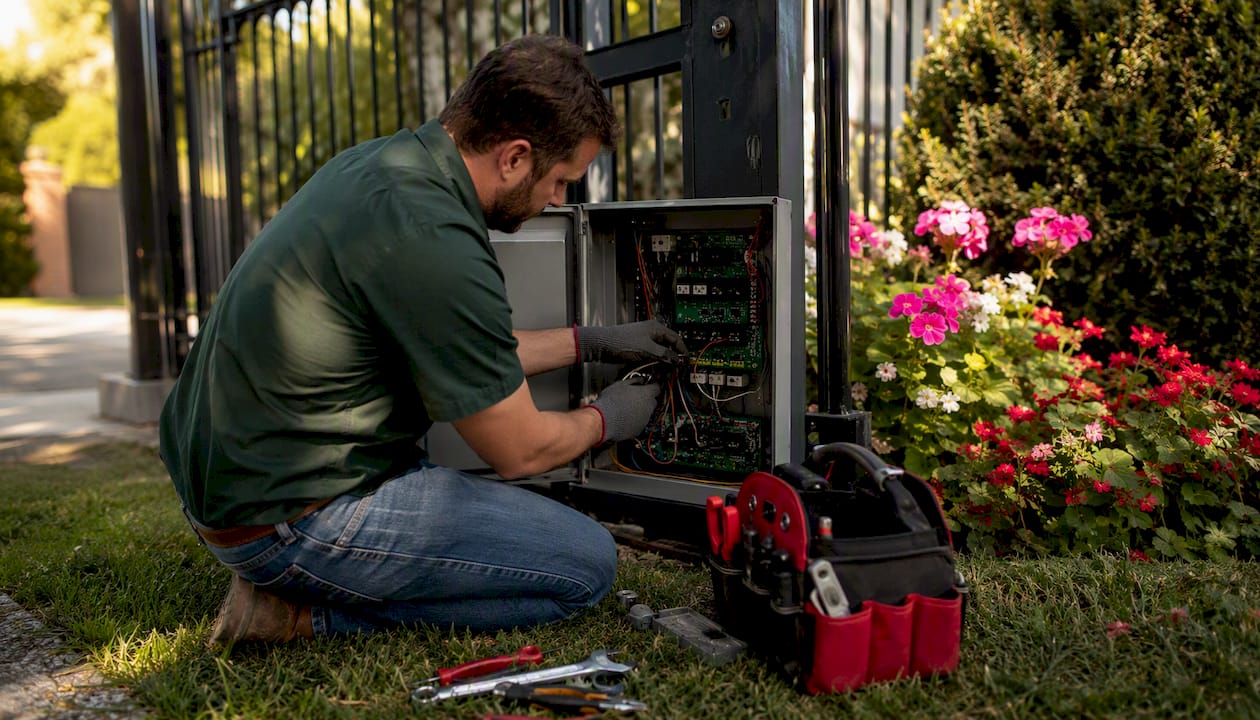
Electrical and moisture damage consistently push repair costs higher. Water intrusion into a control box can damage the board, the motor, and the wiring simultaneously, turning a single-component repair into a multi-item job. Geographic location plays a role here too: properties in humid climates or near coastal areas see accelerated corrosion on terminals and circuit boards.
After-hours and emergency calls carry a premium. Most gate repair companies charge 1.5x to 2x their standard rate for weekend, holiday, or late-night service. If your gate fails to close at 10 PM on a Friday, expect to pay at the top of any range.
Permits are rarely required for a like-for-like repair but may be needed when you are adding a new electrical circuit or upgrading to a different operator type. Check with your local building department before starting any work that involves new wiring.
Pro Tip: Ask your technician whether the diagnostic fee is credited toward the repair. Most reputable companies apply it to the invoice when work is approved on the same visit. That one question can save you $75–$150 on the final bill.
Safe checks to try before you call a technician
Several of the most common “gate won’t move” calls are caused by issues you can resolve in five minutes without any tools. InteleGates identifies power loss, sensor obstruction, and remote failure as the most frequent culprits before any mechanical failure is involved.
- Check the dedicated breaker. Gate operators run on their own circuit in most installations. A tripped breaker is a free fix. Reset it and test the gate before calling anyone.
- Inspect the backup battery. Many operators include a battery backup. A dead or weak battery can prevent operation even when shore power is present. Most batteries last 2–3 years.
- Replace the remote battery. A dead AA or 9V battery in the remote is the single most common cause of a gate that “stopped working.” Try a fresh battery before anything else.
- Clear and realign the photo-eye sensors. Spider webs, leaves, and mud on the sensor lenses are enough to trigger a safety stop. Wipe both lenses with a dry cloth and confirm the indicator lights are solid, not blinking.
- Check the manual release. If someone engaged the manual release (often a red cord or lever on the operator), the gate will not respond to the motor. Re-engage the drive mechanism per the operator’s manual.
- Look for physical obstructions. A rock, a fallen branch, or a shifted post can block the gate’s travel path and trigger the safety reversal. Walk the full travel path before assuming an electrical fault.
Do not attempt to open the operator housing, replace internal drive components, or work on the main power supply yourself. Internal operator work can void your warranty, and high-voltage wiring carries real safety risk. The same applies to an off-track heavy sliding gate: the weight involved makes manual repositioning dangerous without proper equipment.
Repair vs. replacement: how do you decide?
The repair-versus-replace decision comes down to three factors: system age, the scope of what failed, and whether parts are still available.
Gate-a-Mation’s life-expectancy guidance puts the expected service life of a well-maintained gate system at 15 years or more with routine servicing. That benchmark is a useful starting point.
Lean toward repair when:
- The system is under 10 years old and only one component has failed.
- Replacement parts are readily available and the repair cost is less than 40% of a new operator’s installed price.
- The gate frame and posts are structurally sound.
- The system has a transferable warranty with remaining coverage.
Lean toward replacement when:
- The operator is 15 years or older and showing multiple concurrent failures.
- Both the motor and control board need replacement at the same time. At that point, the combined repair cost often approaches the price of a new unit, which comes with a fresh warranty.
- Replacement parts are discontinued or require long lead times.
- You want to add modern features like smartphone access, video intercom, or solar power, which older systems cannot support. The automatic gate options guide covers what current systems offer.
A new residential operator with installation typically runs $1,200–$3,800. If your repair estimate is $900 and the system is 14 years old with a corroded control board, the math usually favors replacement. A new unit also resets the warranty clock, typically to 1–3 years on parts and labor depending on the manufacturer.
What to ask before you hire a gate repair professional
Hiring the right technician protects both your property and your budget. These questions separate reliable contractors from ones who will cost you more in the long run.
- Are you licensed and insured? Ask for proof of both. A contractor working on electrical components without a license creates liability for you as the property owner.
- What is your diagnostic fee, and is it credited toward the repair? This is standard practice, but not universal. Confirm it before booking.
- Do you provide a written estimate before starting work? Any professional company will. No written estimate is a firm red flag.
- What brands and parts do you use? OEM parts carry manufacturer warranties; aftermarket parts vary widely in quality. Know what you are getting.
- What warranty do you offer on parts and labor? Reputable technicians stand behind their work with at least a 90-day labor warranty and a manufacturer’s warranty on parts.
- What is your typical response time? For a gate that won’t close and is leaving your property unsecured, same-day or next-day service matters.
For broader guidance on vetting contractors before you sign anything, these exterior repair contractor hiring tips walk through the questions that consistently separate reliable pros from risky ones.
Typical timelines: A diagnostic visit usually takes 30–60 minutes. Simple repairs like sensor replacement or a remote reprogram are often completed the same day. Control board or motor replacements may require a parts order, adding 1–5 business days. Complex welding or track work on a commercial gate can take a full day on-site.
Red flags to watch for: no written estimate, vague answers about parts brands or sourcing, no proof of insurance, and unusually low bids on complex jobs. A bid that is 50% below every other quote usually means cut-rate parts, unlicensed labor, or both.
Technician tips from Modernfence on preventing costly repairs
Modernfence has been serving residential and commercial property owners across Western Arkansas and Eastern Oklahoma for more than 70 years. Licensed and insured, the team handles everything from basic gate diagnostics to full operator replacement and on-site welding. That depth of field experience points to a consistent pattern: most expensive service calls are preventable.
A simple maintenance schedule prevents the majority of common failures:
- Every 3 months: Clean photo-eye lenses, clear debris from the gate’s travel path, and test the manual release.
- Every 6 months: Lubricate hinges, rollers, and the drive chain or screw with a manufacturer-approved lubricant. Check all mounting hardware for looseness.
- Annually: Test the backup battery under load and replace it if voltage drops below the operator’s minimum spec. Inspect all wiring connections for corrosion or rodent damage.
Properties in humid climates, particularly in Arkansas and Eastern Oklahoma where summer humidity is high, face accelerated corrosion on control board terminals and motor contacts. Upgrading to a sealed, weather-rated control box or placing a desiccant pack inside the existing enclosure is a small upfront cost that can prevent a $300–$1,500 board replacement down the road.
Pro Tip: Schedule a professional inspection every 2–3 years even when the gate appears to be working fine. Technicians catch worn rollers, fraying wiring, and corroded terminals before they cause a failure, which keeps repair costs at the low end of any range.
For ongoing maintenance guidance specific to Arkansas properties, the fence maintenance tips for Arkansas homeowners page covers seasonal care that applies directly to gate hardware as well.
Key Takeaways
Most gate repairs cost between $150 and $1,200, with the final price driven by component type, system age, labor rates, and whether the repair is done during regular business hours.
| Point | Details |
|---|---|
| Core cost range | Most repairs fall between $150 and $1,200; full opener replacement runs $1,200–$3,800. |
| Repair vs. replace threshold | Systems 15 years or older with multiple concurrent failures usually cost less to replace than to repair piecemeal. |
| DIY checks first | Breaker, backup battery, remote battery, and photo-eye alignment resolve many “no-move” calls at zero cost. |
| Safety boundary | Never open the operator housing or work on main power supply wiring; those jobs require a licensed technician. |
| Modernfence | Licensed and insured with 70+ years of experience in Western Arkansas and Eastern Oklahoma, offering diagnostics, repairs, and full operator replacement. |
The real cost of waiting on gate repairs
Most property owners call for service only after the gate stops moving entirely. That is understandable, but it is usually the most expensive way to handle the problem. A gate that hesitates, reverses unexpectedly, or grinds through its cycle is telling you something specific: a roller is worn, a sensor is drifting, or a wiring connection is corroding. Each of those is a $150–$300 fix at the early stage. Left alone, the motor compensates for the mechanical drag, runs hotter, and fails within a season. Now the repair is $600–$1,000.
The other thing clients consistently underestimate is the value of the diagnostic visit. Many property owners skip it because they assume the technician will just recommend the most expensive fix. A good technician does the opposite: they identify the single point of failure and give you a clear repair-vs-replace recommendation with a written estimate. That $100 diagnostic fee is often the cheapest decision you make in the whole process.
What actually prevents repeat service calls is not the repair itself. It is the maintenance that follows. Clean sensors, lubricated hardware, and a functioning backup battery keep a gate running reliably for years between professional visits. The property owners who call Modernfence least often are the ones who followed through on the maintenance schedule after the first repair.
Modernfence can handle your gate repair from diagnosis to done
When your gate stops working and you need a reliable answer fast, Modernfence provides the full range of services that get it resolved: on-site diagnostics, sensor and wiring repair, motor and control board replacement, on-site welding for iron and steel gates, and complete operator replacement when the system has reached end of life. The team also handles access control upgrades when a repair visit reveals that the existing keypad or remote system is outdated.
Modernfence serves residential and commercial property owners across Western Arkansas and Eastern Oklahoma, with licensed and insured technicians who provide written estimates before any work begins. The diagnostic fee is credited toward the repair when you approve the work on the same visit. For a site-specific estimate on your gate repair, visit modernfence.com or call directly. Same-week scheduling is typically available for standard repairs, with priority response for gates that are stuck open or failing to close.
Sources and methodology for the estimates in this guide
The cost ranges in this guide were built from published local and national pricing data, cross-referenced with field experience from gate repair technicians. Labor rates reflect typical U.S. ranges; actual costs vary by region, system brand, and site conditions. All figures are installed costs unless noted otherwise.
| Source | What It Contributes |
|---|---|
| ASAP Gate Services: Troubleshooting Guide | Sensor and motor repair cost benchmarks; DIY check methodology |
| InteleGates: Why Won’t My Gate Open? | Common failure causes; pre-call checklist validation |
| FenceProsd: Gate Repair Cost in San Diego | Line-item installed cost examples; geographic labor-rate context |
| Yelp Cost Guide: Automatic Gate Opener Repair | National average repair and full replacement cost ranges |
| Gate-a-Mation: Life Expectancy | System lifespan benchmarks for repair vs. replacement decisions |
Methodology note: Cost ranges were derived by averaging published low-to-high figures from the sources above, then adjusting for typical U.S. labor rates and parts variance. Regional pricing in markets like San Diego skews higher than the national midpoint; rural markets in the South and Midwest typically fall at or below the midpoint. For precise pricing on your property, request a site-specific estimate from a licensed local contractor. Modernfence provides free written estimates for properties in Western Arkansas and Eastern Oklahoma.