
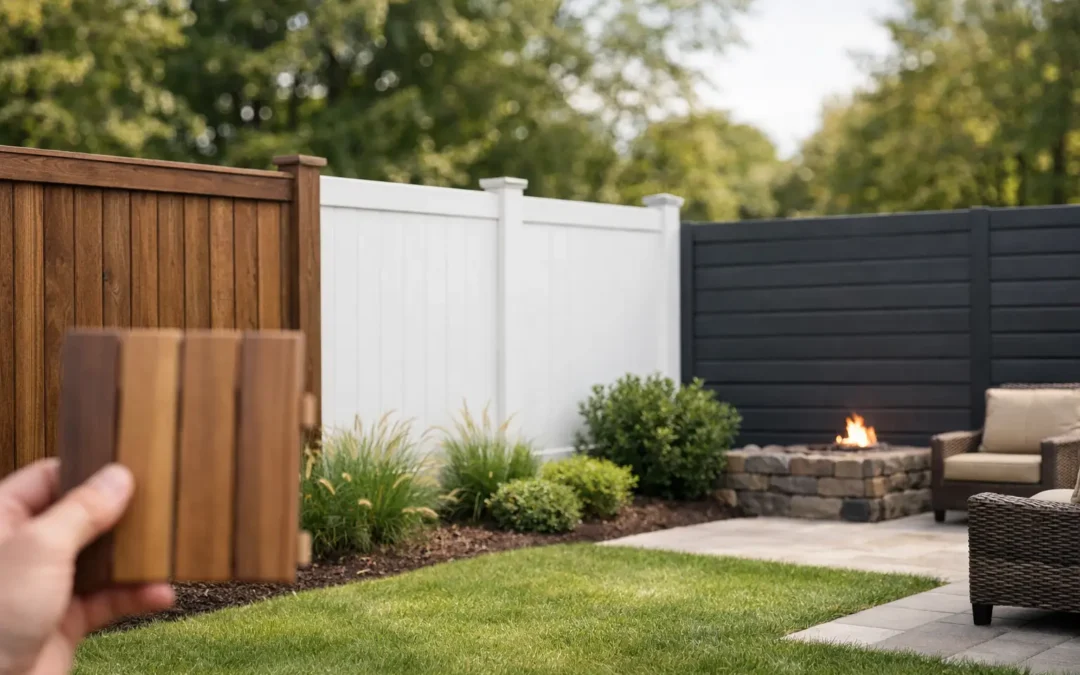
A privacy fence changes how a backyard feels. It can screen a busy street, create a more comfortable pool area, contain pets, and give your family space to relax without feeling exposed. When you need to choose a fence for backyard privacy, the best answer is rarely just “the tallest fence.” Material, layout, maintenance, property conditions, and local requirements all affect whether the finished fence delivers the privacy and value you expect.
Start With What You Need the Fence to Do
Privacy may be the main goal, but it is usually not the only one. A backyard fence might also need to keep a dog secure, soften road noise, define a property line, block an unattractive view, or complement the home’s exterior. Identifying the primary job first helps narrow the material and design choices.
For example, a solid wood or vinyl fence is a stronger choice for screening a neighboring patio than an open ornamental iron fence. If security and visibility matter as much as privacy, you may prefer a design that combines a solid lower section with a more open top. A fence around a pool also requires careful attention to gate placement, latching, and applicable safety requirements.
Think about where privacy matters most. You may not need a solid enclosure around every side of the lot. A targeted privacy section along a patio, outdoor kitchen, hot tub, or exposed property line can protect the spaces you use most while keeping the yard from feeling boxed in.
Choose Fence Material Based on Long-Term Ownership
The right privacy material depends on the appearance you want, how much upkeep you are comfortable with, and how long you plan to stay in the home. Upfront cost is only part of the decision. A fence that needs regular care may still be worthwhile if you value its natural character, while a lower-maintenance option can make more sense for busy households or rental properties.
Wood offers warmth and flexibility
Wood remains a popular privacy-fence material because it looks natural and can be built in many styles. Board-on-board, shadowbox, and solid panel designs all offer different levels of screening and visual interest. Wood can also be stained in colors that complement the home, deck, or landscape.
The trade-off is maintenance. Arkansas and eastern Oklahoma weather can bring moisture, heat, sun exposure, and storms that gradually affect wood. Quality installation, proper post setting, and routine cleaning and staining help extend its service life. Wood is often an excellent choice when homeowners want a traditional look and are willing to maintain it.
Vinyl provides consistent privacy with less maintenance
Vinyl privacy fencing has a clean, uniform appearance and does not require staining or painting. It is a practical option for homeowners who want a solid privacy barrier with limited routine upkeep. Periodic cleaning is generally enough to keep it looking presentable.
Vinyl is not the best fit for every site. Its look is more defined than wood, color options may be limited, and a quality installation is essential so panels, posts, and gates perform properly over time. For a polished, low-maintenance backyard enclosure, it can be a strong long-term investment.
Chain link and iron have more specialized roles
Standard chain link is durable and economical, but it does not create privacy on its own. Privacy slats, screens, or landscaping can improve screening, although they may not match the solid coverage of wood or vinyl. Chain link is often a sensible choice where pet containment, perimeter definition, or budget is the higher priority.
Ornamental iron creates a refined, durable boundary and preserves sightlines. It works particularly well around pools, front yards, and properties with attractive views. It is generally not a stand-alone backyard privacy solution, but it can be paired with shrubs, trees, masonry features, or privacy panels in selected areas.
Select a Height That Works for the Yard
A six-foot fence is common for residential backyard privacy, but common is not the same as automatic. The ideal height depends on the grade of your lot, the height of neighboring decks or windows, nearby roads, and the fence location. A six-foot fence on level ground may provide excellent screening. On a sloped yard, it may leave gaps where visibility is greatest.
Before finalizing height, consider the view from both sitting and standing positions. Look from the patio, pool deck, outdoor dining area, and inside the home. If the property behind you sits higher, a standard-height fence may not fully block the view. In some cases, careful grading, stepped fence sections, landscaping, or a privacy screen near the outdoor living area provides a better result than trying to make the entire perimeter taller.
Always confirm local rules, subdivision restrictions, and utility considerations before construction. Fence height, setback requirements, and front-versus-backyard rules can vary. A professional contractor can help identify practical issues early, before materials are ordered or post holes are dug.
Design Details Affect Real Privacy
Two fences can be the same height and material yet provide very different results. The construction style matters.
A solid privacy fence with boards installed tightly together provides the most direct visual barrier. Board-on-board construction overlaps vertical boards, which helps reduce gaps that can appear as wood naturally expands and contracts. Shadowbox fencing places boards on alternating sides of the rails. It offers a more attractive appearance from both sides and some airflow, but it is not fully private when viewed at an angle.
Gate location also deserves attention. A poorly placed gate can create an unwanted sightline into a seating area or leave a difficult route for lawn equipment. For families with pets or children, gate hardware should be dependable, easy for adults to operate, and difficult to leave unsecured accidentally.
Do not overlook the finished side of the fence. In many neighborhoods, the finished side faces outward toward neighbors or public areas. Discuss this before installation so the design looks intentional from every direction and aligns with any neighborhood expectations.
Account for Terrain, Drainage, and Existing Obstacles
A privacy fence has to follow the property it is installed on. Slopes, retaining walls, mature trees, drainage paths, rock, and existing structures can all influence the final design and cost. Trying to force a simple, level layout onto a difficult lot often creates visible gaps, unstable sections, or drainage problems.
On slopes, a fence may be stepped in level sections or contoured to follow the grade. Each approach has advantages. Stepped sections create a crisp, orderly appearance but can leave ground-level openings that may require attention for pets. A contoured design follows the land more closely, which can improve coverage but requires precise installation.
Drainage is equally important. Fences should not redirect water toward the home, trap runoff against a neighbor’s yard, or interfere with a natural drainage route. In Western Arkansas and Eastern Oklahoma, where changing terrain and heavy rain can be part of the landscape, experienced site planning protects both the fence and the property around it.
Utility lines, irrigation systems, and easements also need to be addressed before digging. A fence contractor should coordinate the layout carefully and make sure the plan respects marked utilities and access requirements.
Match the Fence to Your Maintenance Plan
The most attractive fence is one that still looks good several years after installation. Be realistic about what you will maintain.
Wood benefits from regular inspections, cleaning, and staining or sealing on an appropriate schedule. Check for loose boards, damaged pickets, and gate sagging after storms. Vinyl needs less ongoing work, but it should still be cleaned and inspected for damage. Metal fencing may need occasional touch-ups if its finish is scratched or worn.
The condition of gates and posts matters across every material. Gates carry repeated weight and movement, so properly set posts and quality hardware are not optional details. They are central to a fence that remains secure and easy to use.
Invest in Installation, Not Just Materials
Privacy fencing is only as dependable as its installation. Proper post depth, concrete setting, alignment, bracing, and gate construction determine whether a fence stays straight through seasonal changes and severe weather. A low initial quote can become expensive if the work leaves you with leaning posts, uneven panels, or gates that no longer latch.
Modern Fence Company has served property owners since 1950, and that experience matters when a project involves sloped ground, difficult access, custom gates, or a layout that must balance privacy with curb appeal. A detailed estimate should clarify the material, height, style, gate locations, site conditions, and any factors that could affect the project.
Your backyard should feel like part of your home, not a space you hesitate to use. Choose a fence that fits the way you live now, plan for the conditions of your property, and rely on workmanship that will continue to protect your privacy long after installation day.