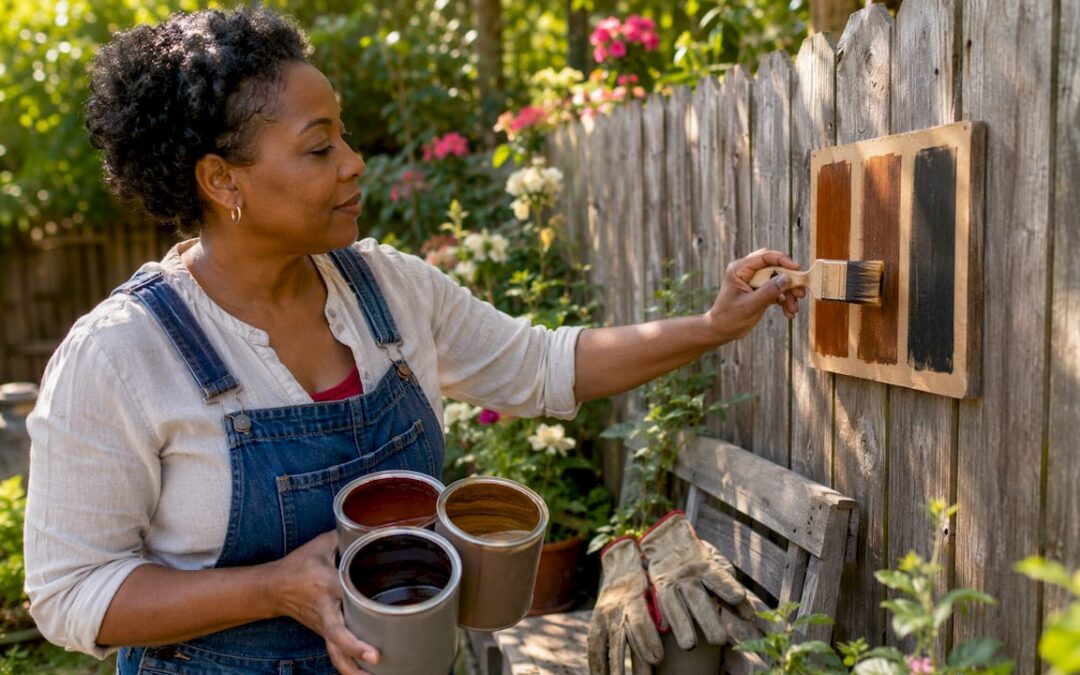
For most Oklahoma homeowners, a mid-tone warm brown or charcoal gray in a semi-transparent to semi-solid formula is the best fence stain choice. It balances grain visibility, UV protection, and long-term maintenance in a way that works across most wood types and architectural styles. Here is what you need to know before you buy a single can.
Top fence stain color families to consider:
- Warm medium brown or chestnut: The most flexible choice for resale. Pairs with brick, stone, and virtually any siding color. Fades gracefully and hides dust and water spots better than darker shades.
- Charcoal or espresso: Strong visual contrast against light siding or modern exteriors. Offers solid UV protection with higher pigment loads, but shows water marks and pollen more clearly, so plan for more frequent cleaning.
- Natural honey or cedar: Highlights grain beautifully on new wood. Works best with semi-transparent formulas on fresh cedar or pine.
- Muted gray or taupe: A safe middle ground for mixed warm-and-cool exteriors. Reads as neutral against almost any hardscape.
Pro Tip: For most homeowners in Western Arkansas and Eastern Oklahoma, a semi-transparent to semi-solid formula in a warm brown or charcoal hits the sweet spot between grain visibility and UV defense. Save solid stains for fences that are already weathered or patched.
Modernfence handles staining projects across Eastern Oklahoma and Western Arkansas, from color selection through professional application.
Table of Contents
- What fence stain colors work best for your home?
- How does stain opacity affect color, grain, and protection?
- How do you choose and test fence stain colors on your actual fence?
- What should you expect for lifespan, maintenance, and cost?
- What fence stain color trends matter in 2026 for Oklahoma homeowners?
- When should you hire a pro for fence staining?
- Key Takeaways
- The color choice most homeowners get wrong
- Modernfence handles staining from color selection to final coat
- Useful sources and further reading
What fence stain colors work best for your home?
Choosing a stain color is not just an aesthetic decision. The right shade works with your home’s siding, trim, roof, and hardscape, and the wrong one can make a fence look disconnected from everything around it. Warm-toned homes pair with browns and ambers, while cool-toned exteriors tend to look sharper with grays and cooler walnut browns.
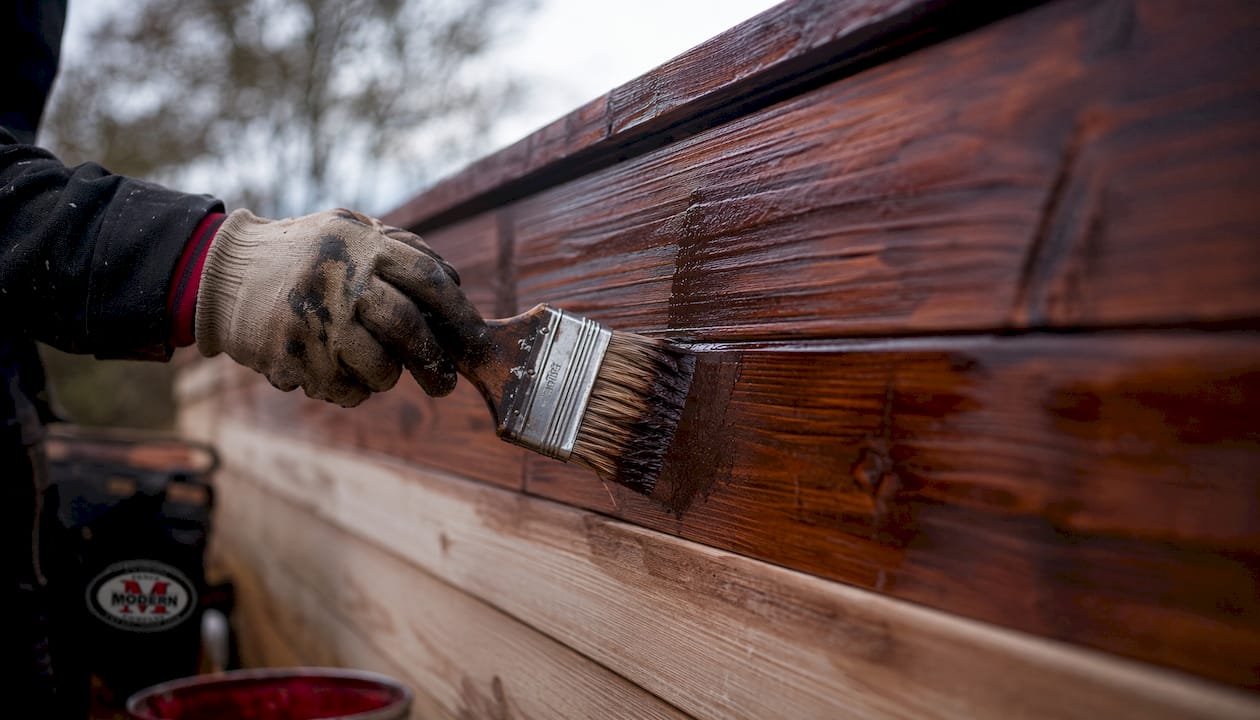
Natural cedar and honey tones
Cedar and honey stains preserve the wood’s warmth and let the grain show through. They suit traditional, farmhouse, and craftsman-style homes particularly well, and they age gracefully, fading to a lighter version of themselves rather than blotching. On new cedar or pine, a semi-transparent honey stain is one of the most popular wood stain choices for good reason.
Warm medium browns and chestnut
Medium brown and chestnut shades are the workhorses of fence stain color combinations. They complement brick, stone, and warmer siding without competing for attention, and they provide strong visual stability on long privacy fence runs. If you are staining a fence primarily for resale value, a mid-tone warm brown is the safest long-term pick.
Dark espresso, charcoal, and near-black
Dark stains deliver the sharpest contrast and the most modern look. Black works well for modern homes; espresso and charcoal read as slightly softer while still making landscaping pop against the fence line. The tradeoff: darker stains show water marks and uneven fading more clearly than lighter ones, so they require more consistent maintenance.
Muted grays and taupes
Gray is a reliable middle ground for homes with mixed warm-and-cool exteriors. It reads as neutral against stone, concrete, and most modern siding colors. Taupe adds a hint of warmth that keeps the fence from looking cold or industrial.
Naturalist greens and slate blues
Olive, sage, and slate blue are valid fence color ideas, especially for garden-focused properties or homes with strong landscape design. They blend the fence into plantings rather than contrasting against them. These shades tend to increase maintenance complexity and can complicate resale, so they work best when the homeowner plans to stay long-term and wants a specific aesthetic.
Quick pairing guide:
- Brick or stone exterior: warm brown, chestnut, or cedar
- Light or white modern siding: charcoal, espresso, or near-black
- Mixed warm-and-cool exterior: gray or taupe
- Garden-heavy property: olive or sage (semi-transparent)
- Traditional or farmhouse style: honey, cedar, or medium brown
Pro Tip: Buy 2–3 sample-size stains and brush them onto a spare board from your actual fence. View the dried samples in midday natural light, not indoors under artificial lighting. The same stain can read two shades warmer or cooler depending on the wood species and how much sun hits that fence face.

How does stain opacity affect color, grain, and protection?
Fence stains are classified by opacity: clear preserves the wood’s natural look with minimal UV protection; semi-transparent balances grain visibility and UV defense; and solid stains provide the most UV protection and uniform coverage, which makes them the right call for hiding imperfections on older wood. Choosing the wrong opacity for your wood’s condition is one of the most common and costly mistakes homeowners make.
| Opacity | Grain visibility | UV protection | Best for | Color effect | Recoat interval |
|---|---|---|---|---|---|
| Clear / transparent | Full | Minimal | New, premium-grade wood | Natural wood tone | 1–2 years |
| Semi-transparent | High | Moderate | New to lightly weathered wood | Tinted, grain shows | 2–4 years |
| Semi-solid | Low to moderate | Good | Moderately weathered wood | Richer, some grain visible | 3–6 years |
| Solid / opaque | None | Highest | Heavily weathered or patched wood | Uniform, paint-like | 4–8 years |
Key rules by wood condition:
- New wood: Start with semi-transparent. It highlights grain and lets the wood breathe while still adding color and UV defense.
- Lightly weathered wood (2–5 years old): Semi-transparent still works if the wood is sound. Move to semi-solid if graying has started.
- Moderately weathered wood: Semi-solid masks uneven color while keeping some texture visible.
- Heavily weathered, patched, or previously painted wood: Solid stain is the practical choice. It covers inconsistencies and delivers the longest recoat interval.
One practical note on recoat schedules: newer wood benefits from semi-transparent oils that highlight grain, while older weathered fences typically require semi-solid or solid stains to mask uneven graying. Solid stains are easier to recoat uniformly, but they commit you to that opacity level going forward. You cannot go back to semi-transparent once a solid coat is down.
Pro Tip: If you want to match your fence stain to exterior trim, look for product lines like Benjamin Moore Woodluxe that offer tintable stain formulas across the full opacity range. This makes color-matching across multiple surfaces straightforward.
How do you choose and test fence stain colors on your actual fence?
The most common mistake is picking a color from a small chip or a photo online without testing it on the actual fence material. Undertones and wood porosity change the final look significantly, and two boards from the same fence can read differently because of grain variation, tannin content, and prior weathering.
Step-by-step testing process:
- Survey your home’s exterior. Note the dominant colors of your siding, trim, roof, and hardscape (concrete, pavers, stone). Write them down or take photos.
- Identify your undertone direction. Warm exteriors (red brick, tan siding, brown roofs) pair with warm stains. Cool exteriors (gray stone, white or blue siding) pair with cooler grays and walnut browns.
- Buy 2–3 sample-size stains in your shortlisted color families. If samples are not available, order test cards from the manufacturer.
- Apply each sample to 2–3 actual fence boards or a spare board cut from the same fence. Use the same application method you plan to use for the full job (brush, roller, or sprayer).
- Let the samples dry fully — at least 24 hours, ideally 48–72 hours — before judging color. Wet stain always looks darker.
- View samples at midday in natural light. Test stain samples on the actual fence wood and view them in midday light before committing, because the same stain reads differently by species, age, and porosity.
- Photograph each sample next to the house and landscaping. Compare photos side by side on your phone. This reveals undertone clashes you might miss standing in front of the fence.
- Check samples on both sun-facing and shade-facing fence sections. A color that looks rich on the shaded north side can look washed out on the south side in full Oklahoma sun.
What to look for when judging samples:
- Does the undertone clash with your siding or trim?
- Does the grain contrast feel right for the style you want?
- How does the color read against nearby plants, stone, or concrete?
- Does the shade look consistent across boards with different grain patterns?
Pro Tip: Professionals often cut a spare board from the actual fence and use it as the test piece. This gives you the most accurate color read because the wood age, species, and weathering match exactly.
What should you expect for lifespan, maintenance, and cost?
Finish lifespan depends primarily on opacity, wood condition, and sun exposure. These are realistic ranges, not guarantees, and Oklahoma’s high UV load tends to push results toward the shorter end of each window.
- Clear stains: 1–2 years before recoat
- Semi-transparent: 2–4 years
- Semi-solid: 3–6 years
- Solid: 4–8 years
Lighter stains fade more gently and hide dust and water spots better; darker stains offer stronger UV protection but can show uneven fading or water marks more clearly. That tradeoff shapes not just how often you recoat, but how often you need to clean.
Main cost drivers to plan for:
- Prep work: Cleaning, light sanding, and board repairs before staining are the biggest variables. A fence in poor condition can double prep time and cost.
- Stain quality: Higher-pigment, oil-based formulas cost more per gallon but typically last longer and require fewer recoats over time.
- Labor vs. DIY: DIY saves on labor but requires the right equipment (sprayer or brush, drop cloths, masking) and a full day or more for a standard privacy fence.
- Surface condition: New wood is faster and cheaper to stain. Weathered or previously stained wood needs more prep, which adds time and cost.
When hiring a pro is worth it:
- Large or tall fences where consistent coverage is hard to achieve by hand
- Heavily weathered boards that need cleaning, sanding, or spot repairs before staining
- HOA or neighbor color-matching requirements where precision matters
- High-UV exposure situations where professional prep and pigment application materially extend the finish life
A contractor’s value on a staining job is mostly in the prep. Professional fence cleaning before staining removes mildew, gray oxidation, and old stain residue that DIY cleaning often misses. That prep work is what separates a finish that lasts four years from one that starts peeling in eighteen months.
Pro Tip: If your fence has any boards that need replacement or repair, handle those before staining. Staining over a damaged board locks in the problem and makes future repairs harder. Modernfence offers pre-stain fence repair as part of its staining service.
What fence stain color trends matter in 2026 for Oklahoma homeowners?
2026 stain color trends favor modern dark tones — charcoal and espresso — alongside classic warm earth tones like cedar, walnut, and honey-oak, and naturalist muted greens and soft grays. These three directions cover most of what homeowners in Western Arkansas and Eastern Oklahoma are asking for right now.
Trending color families in 2026:
- Charcoal and espresso: Strong demand for modern, high-contrast looks, especially on newer homes with light or white siding.
- Cedar, walnut, and honey-oak: Classic warm earth tones remain the most requested category overall. They age well and work across a wide range of architectural styles.
- Muted greens and soft grays: Growing interest in naturalist palettes that blend the fence into the yard rather than contrasting against it.
Regional pigment advice for Oklahoma and Western Arkansas:
Oklahoma’s climate brings intense summer UV, temperature swings, and periodic heavy rain. Those conditions accelerate stain breakdown faster than in milder climates. Higher pigment loads increase UV protection and slow graying, making pigment choice a functional longevity decision as much as an aesthetic one. For any fence with significant south or west sun exposure, a semi-solid or solid formula with a high pigment load is worth the extra cost per gallon.
Dark stains in high-UV areas also absorb more heat, which can accelerate wood movement and checking on boards that are already dry or thin. If you love the charcoal or espresso look, plan for slightly more frequent cleaning and a recoat check at the lower end of the lifespan range. You can review current fence design trends for 2026 to see how these color directions are showing up in local projects.
Pro Tip: In Eastern Oklahoma and Western Arkansas, choose a stain with a UV-blocking pigment load rated for high-sun exposure. The label will typically specify “maximum UV protection” or list the pigment percentage. This single factor has more impact on how long your finish lasts than brand name alone.
When should you hire a pro for fence staining?
DIY staining is realistic for a small, sound fence in good condition. For most other situations, professional application pays for itself in finish quality and longevity.
Signs you should hire a professional:
- Your fence is longer than 100 linear feet or taller than 6 feet
- Boards are weathered, grayed, or show mildew and old stain residue
- You need to color-match a neighbor’s fence or meet an HOA specification
- The fence has been previously painted or stained with a solid coat
- You want a warranty on the finish and consistent coverage across the full run
Professional prep makes the biggest difference on large runs and weathered wood. Consistent pigment application across 200 feet of fence is difficult to achieve with a brush and roller, and uneven coverage shows up clearly once the stain dries. A sprayer with proper masking and back-brushing technique, which is standard for professional crews, delivers a more uniform finish.
Modernfence is licensed, insured, and has served Western Arkansas and Eastern Oklahoma for over 70 years. The team handles site prep, board repairs, cleaning, and staining in the opacity and color you choose, with color-matching available for HOA or multi-property projects. For homeowners in the region, that combination of local experience and full-service prep is what makes the difference between a finish that looks good for two years and one that holds for five or six. You can also review the Arkansas homeowner’s staining guide for regional scheduling and prep tips.
Pro Tip: Ask any contractor you hire whether prep is included in the quote or billed separately. Prep — cleaning, sanding, and repairs — is where most of the labor cost lives on a staining job. A low quote that excludes prep often ends up costing more.
Key Takeaways
The single most important step in choosing a fence stain is testing your shortlisted colors on the actual fence wood in midday natural light before committing to a full application.
| Point | Details |
|---|---|
| Best color families | Warm medium brown and charcoal are the most versatile picks for most Oklahoma homes. |
| Opacity rule by wood condition | Use semi-transparent on new wood; move to semi-solid or solid on weathered or patched boards. |
| Lifespan ranges | Clear stains last a short time before recoating is needed; semi-transparent stains offer moderate durability; semi-solid stains provide good coverage and protection; solid stains offer the longest protection and uniform coverage. |
| Test before you commit | Apply samples to actual fence boards, let dry 48–72 hours, and view in midday sun. |
| Modernfence staining service | Modernfence provides full-service staining in Eastern Oklahoma and Western Arkansas, including prep, repairs, and color matching. |
The color choice most homeowners get wrong
Most homeowners spend too much time debating color families and not enough time thinking about opacity. The color is what you see in the showroom. The opacity is what determines whether your fence looks great in year three or starts peeling in year two.
The other thing worth saying plainly: neutral mid-tone browns are not a boring default. They are the choice that ages the best, photographs well in every season, and does not complicate resale. Bold colors like olive green or slate blue are genuinely appealing on the right property, but they narrow your buyer pool and tend to require more frequent recoats because unconventional pigment blends are less standardized across product lines.
In Oklahoma’s climate specifically, the UV load is real enough that pigment load should be part of the conversation from the start. A semi-transparent stain with a high-pigment formula in a warm brown will outperform a low-pigment solid stain in terms of how long it actually protects the wood. The label matters. The prep matters more. And testing on-site before committing is the one step that almost no one skips twice after they have learned the hard way.
Modernfence handles staining from color selection to final coat
Picking the right color is only half the job. Professional prep and consistent application are what make a stain last. Modernfence brings over 70 years of regional experience to every staining project in Eastern Oklahoma and Western Arkansas, covering site prep, board repairs, fence cleaning, and full stain application in the opacity and color you choose.
What Modernfence’s staining service includes:
- Pre-stain inspection, cleaning, and board repair
- Color consultation and opacity recommendation based on your wood’s condition
- Professional application with consistent coverage across the full fence run
- Color matching for HOA requirements or multi-property projects
- Warranty options on labor and finish
Whether you are staining a new wood fence installation or refreshing a weathered privacy fence, Modernfence gives you a clear estimate and a finish that holds up to Oklahoma’s climate. Call or contact us online for a free estimate and get your color questions answered by a local pro.
Useful sources and further reading
These are the primary sources used for facts, opacity definitions, and trend data in this article.
-
ReadySeal — Semi-Transparent vs. Solid Stain: Clear definitions of opacity categories and practical guidance on when to use each. The most useful single reference for understanding how opacity affects grain visibility, UV protection, and recoat intervals.
-
ZAR Blog — What Is the 2026 Stain of the Year: Trend data on 2026 color directions, including the shift toward dark modern tones, classic warm earth tones, and naturalist grays and greens.
-
Color Store (Benjamin Moore Woodluxe) — Choosing the Best Fence Stain Colors: Practical color-pairing guidance by home exterior style, plus information on tintable stain product lines for matching trim and fence colors.
-
Rubio Monocoat USA — Fence Stain Guide: Professional recommendations on sample testing, midday light viewing, and how wood species and porosity affect final color.
-
Fence Pros of Texas — Expert Tips for Choosing Fence Staining Colors: Regional contractor perspective on light vs. dark stain tradeoffs, including fading behavior and water mark visibility.
-
FenceTrac — How to Choose the Right Fence Color for Your Home: Color-pairing summaries by architectural style, including guidance on black, gray, and brown/tan for different exterior types.
-
Fence Armor — Fence Stain Color Ideas: Guidance on choosing stain differently for new versus weathered wood, with practical notes on curb appeal and opacity selection.