
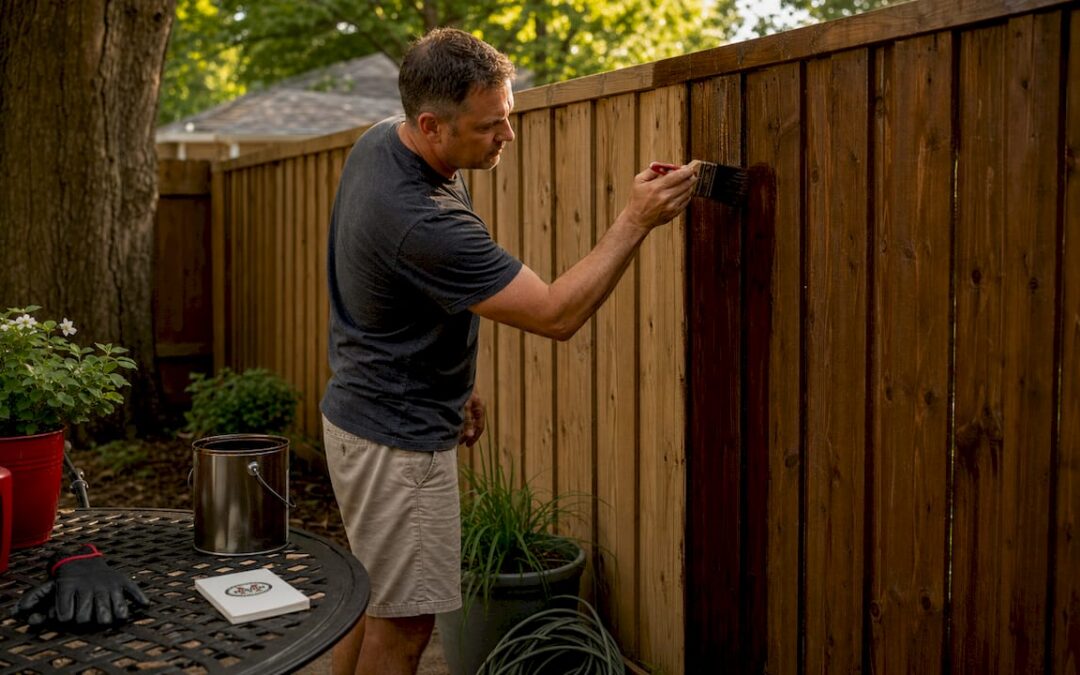
Fence staining is the process of applying a protective and decorative finish to wooden fences by local professionals to preserve their appearance and extend their lifespan. When you search for fence staining near me, you are looking for contractors who clean, prep, and coat your wood fence with products designed to block UV damage and moisture. Professional fence staining services typically cost between $655 and $2,118, with the national average around $2,000 for a standard privacy fence. Modernfence has served Western Arkansas homeowners and property managers for over 70 years, combining licensed expertise with deep knowledge of local climate conditions that directly affect how long a stain lasts.
What do local fence staining services include?
Professional fence staining services cover far more than brushing color onto wood. A complete service includes cleaning, surface preparation, and stain application using techniques that ensure the product bonds properly with the wood grain.
The preparation step is the most critical part of the process. Contractors use power washing to strip away mildew, dirt, and oxidized gray wood fibers that prevent stain from bonding. Proper prep work typically takes 4–8 hours for a standard 100-foot fence project. Skipping this step is the single fastest way to end up with peeling, uneven color within a season.
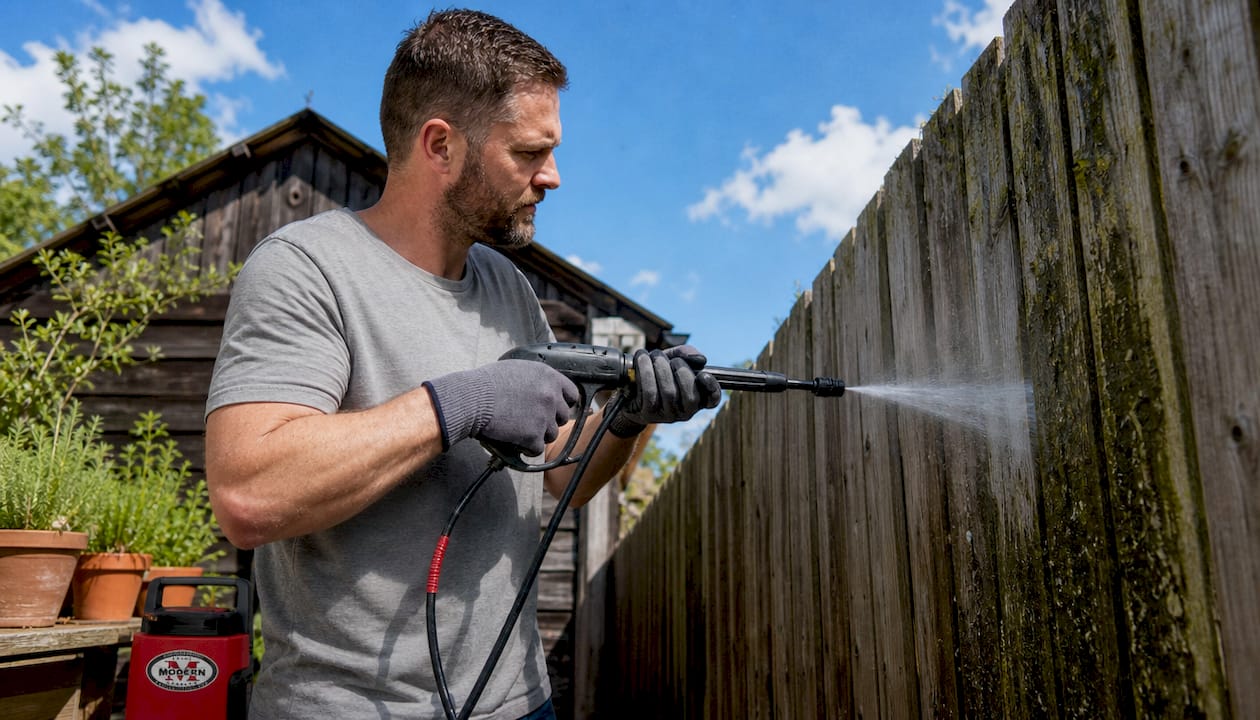
After cleaning, the fence must dry completely before any stain goes on. Then contractors apply the stain using a two-step method: spraying for coverage, followed immediately by back-brushing to push the product deep into the wood grain. Spraying alone leaves an uneven finish that fails quickly. Back-brushing is the industry standard for quality results.
Here is what a full-service fence staining job covers:
- Power washing to remove mildew, gray fibers, and surface grime
- Drying time to confirm the wood is ready to absorb stain
- Stain application using spray equipment for full coverage
- Back-brushing to work the stain into the wood grain evenly
- Final inspection to catch missed spots or uneven color
Pro Tip: Ask any fence staining company near you to confirm they include back-brushing in their process. If they only spray, the finish will look good for a few months and then fail.
Professional-grade stains provide UV and moisture protection for up to 4 years before reapplication is needed. The actual lifespan depends on stain type, wood species, and how much sun and rain the fence receives in your area.
How much do fence staining services cost?
Fence staining cost depends on fence size, prep requirements, stain type, and local labor rates. Understanding the pricing structure helps you evaluate quotes and avoid overpaying.
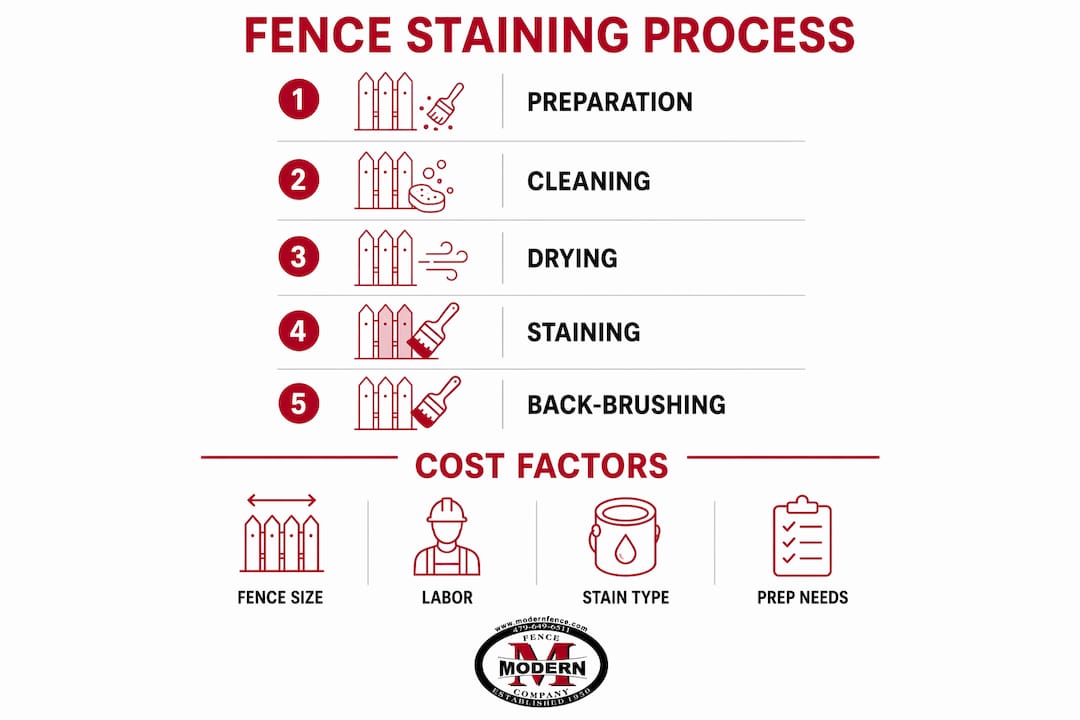
Professional projects typically range from $655 to $2,118, with the national average around $2,000 for a 209-linear-foot, 6-foot-high privacy fence stained on both sides. That average gives you a solid baseline for budgeting a full backyard fence in Arkansas.
| Cost factor | Typical range |
|---|---|
| Total project cost | $655–$2,118 |
| Cost per square foot | $1.33–$2.71 |
| Cost per linear foot | $2–$14 |
| Labor rate per hour | $40–$60 |
| Labor per sq ft (application only) | $0.30–$0.70 |
Labor accounts for a significant share of the total price. Professional labor runs $40–$60 per hour, and a standard 100-foot fence takes 4–8 hours including prep and back-brushing. That means labor alone can reach $240–$480 on a smaller fence before materials are added.
DIY staining costs less upfront but carries real risks. Homeowners who skip power washing or apply stain to damp wood end up with peeling finishes that require stripping and re-staining within a year. The cost of that mistake often exceeds what a professional would have charged. For property managers overseeing multiple units, professional fence staining services near you deliver consistent results and documented maintenance records that protect property value.
Fence size is the biggest pricing variable. A small decorative fence around a garden costs far less than a full perimeter privacy fence. Prep needs also shift the price. A fence covered in mildew or with old peeling stain requires more labor than a clean, bare wood surface.
What stain type works best for Arkansas fences?
Stain type selection directly affects how long your fence stays protected and how much maintenance it needs. Arkansas homeowners deal with hot summers, high humidity, and significant UV exposure, all of which stress wood finishes quickly.
Semi-transparent vs. solid stains
Semi-transparent stains highlight the natural wood grain and require less prep work at reapplication time. Solid stains conceal blemishes and provide a uniform color, but they need more upkeep because they sit closer to the surface and show wear more visibly. For most residential wood fences in Arkansas, semi-transparent stains offer the better long-term value.
Penetrating stains vs. film-forming paints
Fence paint forms a surface film that peels as the wood expands and contracts with temperature changes. Stain penetrates the wood pores and protects from the inside out. In humid or sunny climates, penetrating oil-based stains outperform film-forming products significantly. Arkansas summers push wood through extreme expansion and contraction cycles, which is exactly the condition where paint fails and penetrating stain holds.
New pressure-treated wood
New pressure-treated lumber requires a curing period before staining. The wood contains moisture and chemical preservatives that block stain absorption. Staining too soon causes poor adhesion and uneven color. Professional contractors verify moisture content before applying any product. If you just had a new fence installed, plan to wait before scheduling staining services.
Pro Tip: Do the water bead test before scheduling a stain job. Sprinkle water on the wood surface. If it beads up, the wood is not ready to absorb stain. If it soaks in quickly, the surface is ready.
When should you schedule fence staining near me?
Timing a fence staining project correctly extends the life of the finish and prevents common application failures. The right window depends on weather conditions and the current state of your fence.
-
Schedule in late spring or early fall. Mild temperatures and low humidity give stain the best conditions to penetrate and cure. Arkansas summers are too hot and humid for ideal staining conditions. Extreme heat causes stain to dry too fast, preventing deep penetration.
-
Watch for these signs that re-staining is due. Fading color, visible gray wood fibers returning, and water soaking into the surface instead of beading off all signal that the existing stain has worn through. Do not wait for peeling or cracking, which means the wood is already absorbing damage.
-
Plan for reapplication every 2–4 years. Semi-transparent stains need attention on the shorter end of that range in high-sun exposures. Solid stains can stretch closer to 4 years with proper prep and application. Arkansas’s climate leans toward the shorter end of that cycle. Reviewing your fence maintenance schedule annually keeps you ahead of visible deterioration.
-
Book early in the season. Fence staining companies near you fill up quickly in spring. Scheduling in february or march for an april or may application gives you the best contractor availability and pricing flexibility.
-
Combine cleaning and staining in one visit. Scheduling fence cleaning services and staining together reduces total labor cost and ensures the wood is properly prepped before the stain goes on.
Key Takeaways
Professional fence staining requires proper surface preparation, the right stain type for your climate, and back-brushing during application to deliver a finish that lasts 2–4 years.
| Point | Details |
|---|---|
| Prep is non-negotiable | Power washing removes mildew and gray fibers so stain bonds correctly to the wood. |
| Back-brushing is the standard | Spraying alone causes uneven finish; back-brushing pushes stain deep into the grain. |
| Budget $655–$2,118 | Most professional projects fall in this range depending on fence size and prep needs. |
| Choose penetrating stain in Arkansas | Oil-based penetrating stains outperform film-forming paints in hot, humid climates. |
| Re-stain every 2–4 years | Arkansas weather conditions push most fences toward the shorter end of that cycle. |
What I’ve learned from watching fence staining go wrong
Most fence staining failures I’ve seen come down to one of two mistakes: staining over dirty wood, or hiring a contractor who only sprays without back-brushing. Both problems are completely avoidable if you know what to ask before signing a quote.
The dirty wood problem is more common than you’d expect. Homeowners see a fence that looks fine from a distance and assume it’s ready for stain. But gray wood fibers, surface mildew, and old oxidized finish create a barrier that prevents new stain from bonding. The result looks great for a few weeks, then starts peeling by fall. Staining over damp or dirty wood is the leading cause of premature staining failure. A contractor who skips power washing is cutting corners that will cost you money.
The back-brushing issue is subtler but just as damaging. Spraying stain is fast and looks thorough, but it sits on the surface rather than penetrating the grain. Without back-brushing, the finish weathers off within a season. When you choose a fence company near you, ask specifically whether their process includes back-brushing after spraying. If they hesitate or say it is not necessary, that is a clear signal to keep looking.
Local climate knowledge matters more than most homeowners realize. A contractor familiar with Arkansas’s humidity levels and temperature swings will select stain products and application windows that match your actual conditions. Generic advice from a national franchise does not account for the specific stress your fence faces in Fort Smith or the River Valley.
Finally, get itemized quotes. A quote that just says “stain fence” tells you nothing about whether prep is included, how many coats are applied, or what product is being used. Transparency in the quote is a reliable indicator of transparency in the work.
— mark
Modernfence fence staining services in Arkansas
Modernfence has protected wood fences across Western Arkansas and Eastern Oklahoma for over 70 years. The company’s fence staining and cleaning services cover the full process: power washing, surface preparation, and professional stain application using back-brushing technique for lasting results.
Whether you need a first-time stain on a newly cured fence or a full wood fence restoration on an aging structure, Modernfence brings licensed, insured expertise to every project. The team understands Arkansas climate conditions and selects stain products that hold up against local heat and humidity. Contact Modernfence through modernfence.com to request your free estimate and protect your fence investment before the next season takes its toll.
FAQ
How long does professional fence staining last?
Professional fence stains last 2–4 years depending on stain type and climate. Semi-transparent stains typically need reapplication on the shorter end of that range in high-sun or humid environments like Arkansas.
What is included in fence staining services near me?
A complete service includes power washing, drying time, stain application by spraying, and back-brushing to push the product into the wood grain. Prep work is the most labor-intensive part and should always be included in the quote.
How much does fence staining cost?
Most professional fence staining projects cost between $655 and $2,118, with the national average around $2,000 for a standard 209-linear-foot privacy fence stained on both sides. Cost per square foot runs $1.33–$2.71.
What is the difference between fence stain and fence paint?
Stain penetrates wood pores and protects from the inside out, while paint forms a surface film that peels as wood expands and contracts. In humid or sunny climates, penetrating stain outperforms paint for long-term durability and easier maintenance.
When is the best time to stain a fence in Arkansas?
Late spring or early fall offers the best conditions for fence staining in Arkansas. Mild temperatures and lower humidity allow stain to penetrate and cure properly. Avoid staining during peak summer heat, which causes stain to dry too fast for deep wood penetration.