

A vinyl fence installation cost calculator is a tool that estimates your total project cost by accounting for materials, labor, gates, concrete, and site conditions. Relying on panel price alone consistently underestimates the real installed cost. Nationally, professional installation runs $47–$82 per linear foot in 2026, and a standard 150-foot backyard fence costs $7,050–$12,300 fully installed. The industry term for this process is “project cost estimation,” and a good calculator applies formula-driven logic to every variable so you get a realistic budget before breaking ground. Oklahoma homeowners and property managers who skip this step routinely face budget shortfalls mid-project.
How does a vinyl fence installation cost calculator work?
A cost estimator breaks your project into measurable inputs and applies formulas to each one. The result is a line-item budget, not a single vague number. Understanding each input helps you catch errors before you commit to a contractor or a materials order.
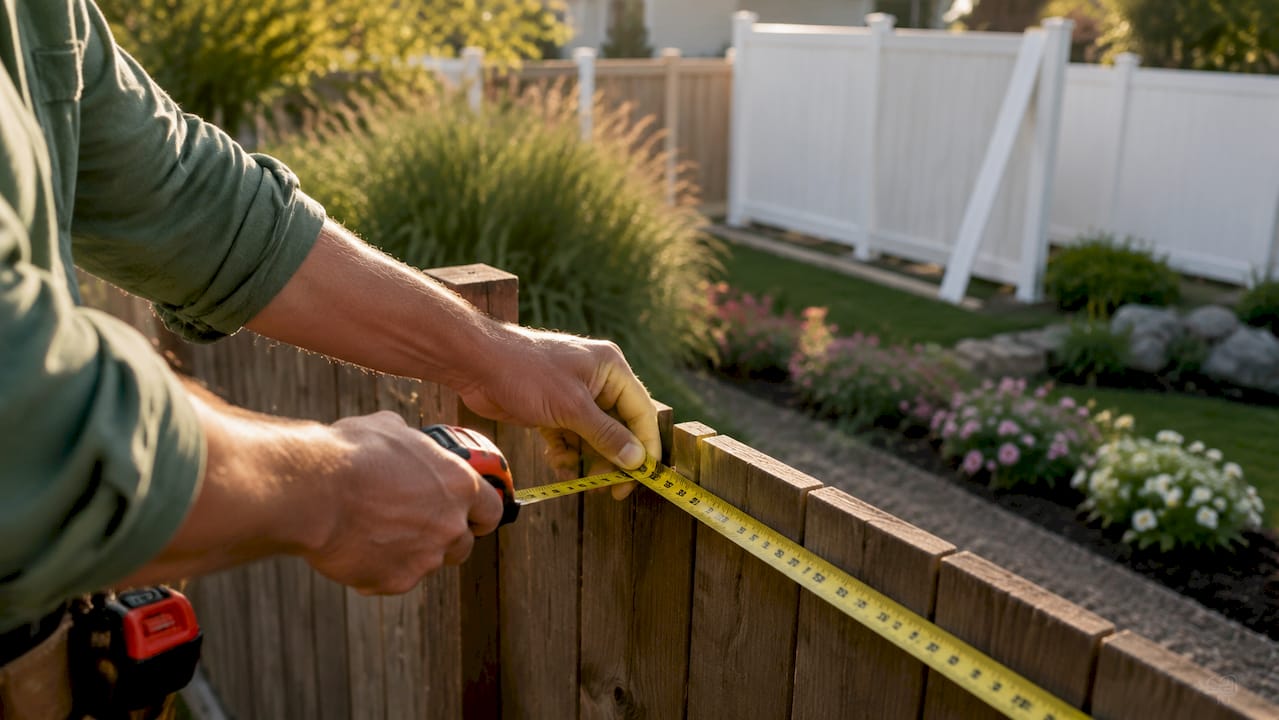
Measuring linear footage and panel count
Start by measuring the total perimeter you want to fence. Subtract the width of each gate opening from that total. Divide the remaining footage by your panel length (typically 6 or 8 feet) using ceiling division, meaning you always round up to the next whole panel. That number becomes your panel count, and it directly drives your material cost.
Post count and concrete requirements
Post count follows a separate formula. Add one post per panel, then add one extra terminal post at each end and two extra posts per gate opening (one on each side). Each post hole typically requires 1–2 bags of concrete depending on post diameter and local frost depth. Oklahoma’s clay-heavy soil in many counties can affect how deep posts must go, which changes your concrete total.
Labor, gate hardware, and height surcharges
Professional estimating includes panel counts, post spacing, gate hardware premiums, and labor rates as interdependent variables. Labor surcharges apply when fence height increases or when panel style (privacy vs. picket) changes installation complexity. Gate hardware adds $270–$490 for a single gate and $520–$940 for a double gate due to reinforced hinge posts and self-closing hardware. A miscellaneous hardware allowance of 5–10% of material cost covers caps, screws, and trim pieces most homeowners forget.
Pro Tip: Always add a 10% contingency line to your calculator output. Material waste from cuts and unexpected site conditions routinely consume that buffer on real projects.
Height changes the math significantly
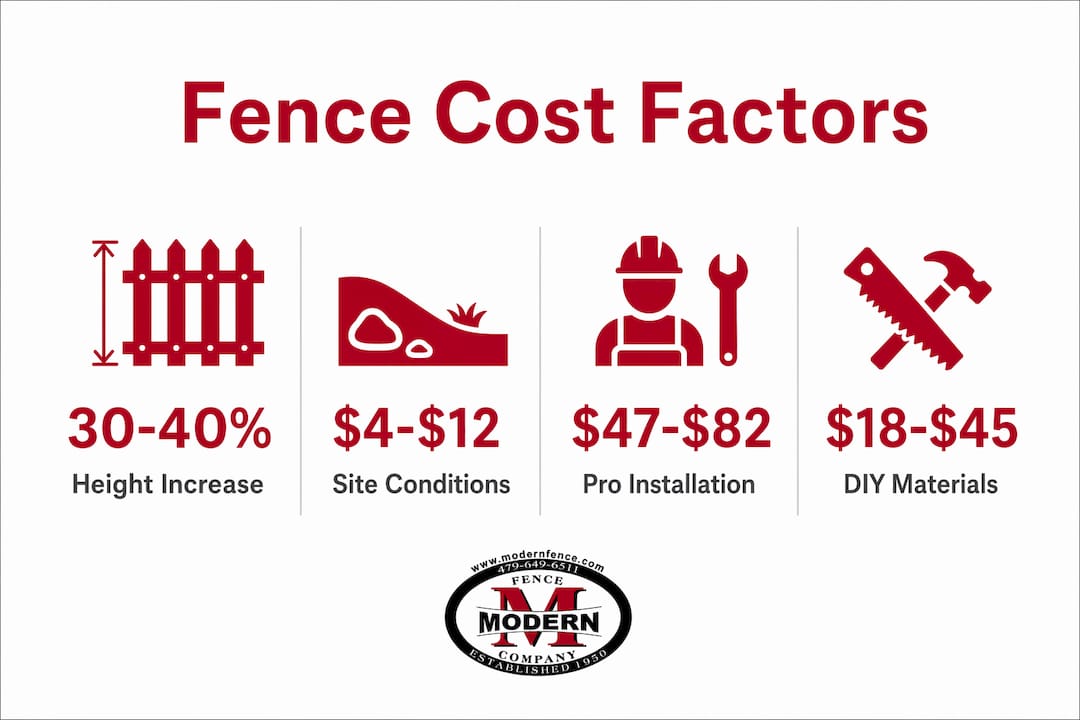
Moving from a 4-foot to a 6-foot fence increases material cost 30–40%. Going from 6 to 8 feet raises total project cost 50–70% because deeper posts, engineered drawings, and wind-load permits enter the picture. Permits for 8-foot fences cost $200–$1,500 or more depending on the municipality. In Oklahoma, local permit requirements vary by city, so check with your municipality before finalizing height.
What affects vinyl fence installation costs in Oklahoma?
Regional pricing differences are real and significant. Northeast states and Hawaii see $38–$65 or more per linear foot, while Southern states like Mississippi see $18–$33 per foot. Oklahoma falls in the mid-range, with labor rates lower than coastal markets but higher than the deepest South. Soil conditions, frost depth, and local permit fees all shift the final number.
Cost ranges by fence style
| Fence style | Typical installed cost per linear foot |
|---|---|
| Privacy (6 ft) | $28–$55 |
| Picket (3–4 ft) | $18–$38 |
| Ranch rail (2–3 rail) | $15–$30 |
| Semi-privacy (5–6 ft) | $25–$48 |
Privacy fences cost the most because they use the most material per linear foot and catch the most wind load. Ranch rail fences cost the least because they use minimal material and require less concrete per post.
Site conditions that add to your estimate
Slopes, rocky soil, tree roots, and old fence removal add $4–$12 per linear foot in extra labor and materials. That surcharge is not optional. Steep terrain requires special footing methods and longer installation time. Old fence removal adds disposal costs and labor that most basic calculators omit by default.
Wind load sensitivity in privacy vinyl fences means that cheap materials or improper post depth cause premature failure. Oklahoma’s open plains and storm-prone weather make this especially relevant. A fence that fails after two seasons costs far more than one installed correctly the first time.
Pro Tip: If your yard has any slope greater than a few inches per 8-foot run, add at least $6 per linear foot to your calculator estimate before comparing contractor bids.
DIY material costs vs. professional installation: what the numbers show
The cost gap between DIY and professional installation is real, but it narrows when you account for hidden expenses. DIY material costs run $18–$45 per linear foot, while professional installed costs run $47–$82 or more per linear foot. The difference looks large on paper. In practice, several factors close that gap.
Hidden DIY costs that most homeowners miss include:
- Equipment rental: Post hole diggers, concrete mixers, and levels add up quickly for a project longer than 100 feet.
- Material waste: Cutting panels to fit corners and gate openings generates waste. Budget 8–12% extra material beyond your panel count.
- Rework expense: A misaligned post or improperly set concrete requires breaking out and resetting, which costs time and materials.
- No warranty coverage: DIY installations carry no contractor warranty, meaning any failure comes out of your pocket.
- Permit and inspection risk: Some Oklahoma municipalities require a licensed contractor for permit approval. A DIY install may not pass inspection.
Contractor quotes bundle layout labor, concrete, gate hardware, waste disposal, and warranty risk into the per-foot price. That bundling is what makes professional bids look expensive compared to a materials-only quote. A hybrid approach works well for some homeowners: handle your own demolition and old fence removal, then hire a professional for installation. This approach can reduce total project cost by $3–$6 per linear foot without taking on the technical risk of post setting and panel alignment.
For a professional vinyl fence installation that avoids these pitfalls, the per-foot premium pays for itself in longevity and peace of mind.
How to use a vinyl fence cost estimator effectively
Getting accurate output from any fence installation price calculator requires accurate input. Garbage in, garbage out applies here as much as anywhere.
- Measure your perimeter precisely. Use a measuring wheel, string line, or satellite map tool. Estimate high rather than low. Buying extra panels is cheaper than a second delivery.
- Select the correct fence height and style. Changing height after ordering materials is expensive. Confirm HOA rules and local ordinances before locking in your height selection.
- Enter gate count and width carefully. Each gate changes your post count, hardware cost, and panel layout. A double gate on a 10-foot opening requires different math than two single gates.
- Adjust the labor rate input for your market. Oklahoma labor rates differ from national averages. Use local contractor quotes as a benchmark for the professional rate field in your calculator.
- Add site condition surcharges manually. Most online calculators use flat-site assumptions. If your yard has slope, roots, or an existing fence to remove, add the $4–$12 per linear foot surcharge yourself.
- Review every line item in the output. A transparent calculator shows panel cost, post cost, concrete cost, gate hardware, and labor separately. Any tool that shows only a single total number is not giving you enough information to compare bids.
Pro Tip: Run your calculator twice: once for DIY materials only and once with a realistic professional labor rate. The difference tells you exactly what you are paying for professional expertise, and that number is easier to evaluate than a contractor’s bid in isolation.
After running your estimate, use it as a benchmark when collecting contractor quotes. A quote that comes in 30% below your calculator output deserves scrutiny. A quote that matches or slightly exceeds it is likely realistic. Understanding overlooked expenses in vinyl fence projects helps you ask the right questions when reviewing bids.
Key takeaways
Accurate vinyl fence cost estimation requires formula-driven inputs covering materials, labor, gates, site conditions, and height to produce a realistic project budget.
| Point | Details |
|---|---|
| Use formula-driven calculators | Calculators that break costs into panels, posts, concrete, and labor produce far more accurate budgets than single-number estimates. |
| Height drives cost sharply | Moving from 6 to 8 feet raises total project cost 50–70% due to deeper posts, permits, and wind-load requirements. |
| Site conditions add $4–$12 per foot | Slopes, rocky soil, and old fence removal consistently add labor and material costs that basic calculators omit. |
| DIY savings narrow with hidden costs | Equipment rental, waste, rework, and no warranty coverage reduce the real savings gap between DIY and professional installation. |
| Regional rates vary significantly | Oklahoma falls in a mid-range cost zone; always adjust calculator labor inputs to match local market rates before comparing bids. |
Why I think most homeowners underestimate this project
After years of watching fencing projects go sideways, the pattern is consistent. Homeowners pull a panel price from a home improvement store, multiply by their linear footage, and call that a budget. Then the contractor quote arrives and it is double what they expected. The shock is predictable, and it is entirely avoidable.
A detailed vinyl fence cost estimator forces you to confront every variable before you are emotionally committed to a project. That is its real value. It is not about getting a perfect number. It is about understanding the structure of the cost so you can have an intelligent conversation with a contractor and recognize when a bid is missing something.
The 20–30% budget overruns I see most often come from three sources: forgetting gate hardware, ignoring site condition surcharges, and underestimating permit costs for taller fences. A good calculator surfaces all three. The homeowners who use one walk into contractor meetings prepared. They ask better questions, spot incomplete bids, and make decisions based on real numbers rather than wishful thinking.
Balancing cost and quality matters too. The cheapest installed fence is rarely the best value over a 20-year horizon. Wind load and proper post depth determine whether your fence survives Oklahoma’s storm seasons. Spend the time with a calculator, then spend your money on installation that lasts.
— mark
Modernfence can help you plan and install your vinyl fence
Modernfence has served homeowners and property managers across Western Arkansas and Eastern Oklahoma for over 70 years. The team brings licensed, insured installation to every project, with detailed cost assessments that reflect real site conditions, not flat-rate assumptions.
When you contact Modernfence for a quote, you get a line-item breakdown that mirrors what a good calculator produces, so you can see exactly where your money goes. The company’s fence installation guide covers site preparation, terrain considerations, and professional practices that affect both project success and long-term cost. For Oklahoma homeowners ready to move from estimate to installation, Modernfence is the call that turns a calculator output into a finished fence. Reach out for your free estimate today.
FAQ
What does a vinyl fence installation cost calculator include?
A vinyl fence installation cost calculator estimates panel count, post count, concrete, gate hardware, labor, and site condition surcharges. It produces a line-item budget rather than a single total, giving you a realistic baseline before contacting contractors.
How much does professional vinyl fence installation cost per foot in Oklahoma?
Professional installation nationally runs $47–$82 per linear foot in 2026, with Oklahoma falling in the mid-range of that scale. Site conditions, fence height, and gate count all shift the final per-foot cost.
Is DIY vinyl fence installation worth it?
DIY material costs run $18–$45 per linear foot, but hidden expenses like equipment rental, material waste, rework, and no warranty coverage narrow the savings gap significantly. A hybrid approach, handling demolition yourself while hiring a pro for installation, often offers the best balance of cost and quality.
How does fence height affect total project cost?
Moving from a 6-foot to an 8-foot fence raises total project cost 50–70% due to deeper post requirements, wind-load engineering, and permit fees ranging from $200 to $1,500 or more. Always confirm local permit requirements before selecting fence height.
What site conditions add the most cost to a vinyl fence project?
Slopes, rocky soil, tree roots, and old fence removal each add $4–$12 per linear foot in extra labor and materials. Most online calculators use flat-site assumptions, so homeowners should add these surcharges manually when their yard has any of these conditions.