
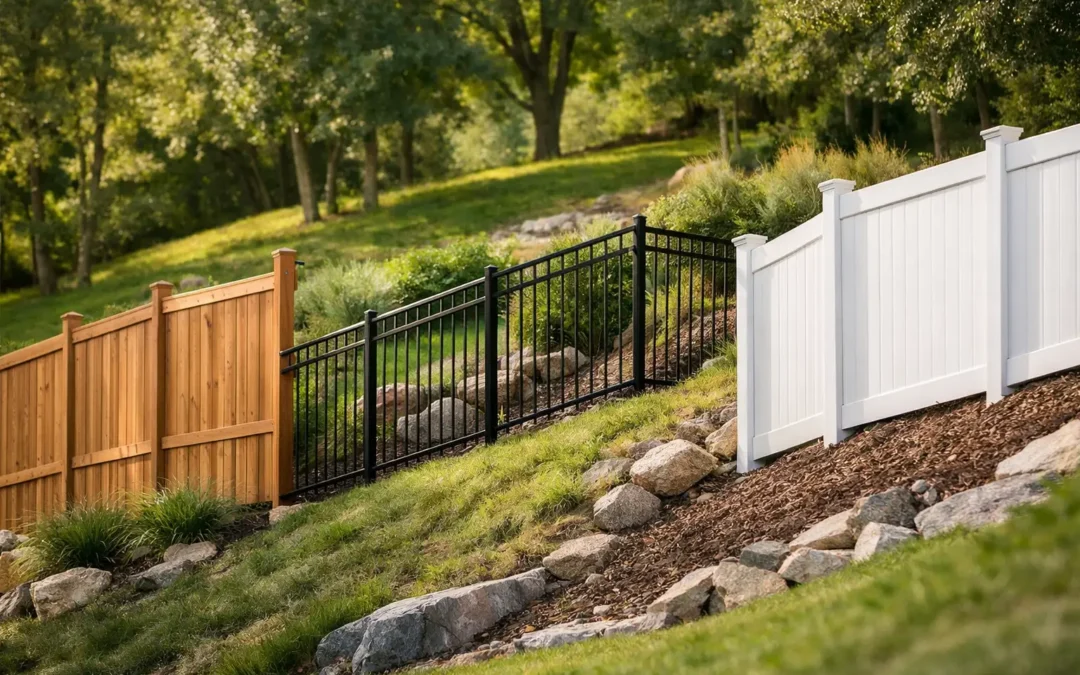
A sloped yard can turn a straightforward fence project into a precision installation. The best fences for sloped yards are not defined by one material alone. They depend on the grade of the property, the level of privacy or security needed, drainage patterns, and whether the fence should follow the land or create a level, formal appearance.
For homeowners and businesses in Western Arkansas and Eastern Oklahoma, terrain is rarely the only consideration. Heavy rain, clay soils, utility locations, gates, and property lines all affect how a fence performs over time. A well-planned fence should look intentional on a hill, keep gaps under control, and have posts set to handle changing ground conditions.
The Two Ways to Build a Fence on a Slope
Before choosing a material, choose the installation approach. Most fences on uneven ground are installed either by racking or stepping. Each can be the right choice, but they create very different results.
A racked fence follows the contour of the slope. Its rails angle gradually with the ground, keeping the bottom of the fence close to the surface. This is often the cleanest choice for a mild, consistent grade, especially where containing pets or limiting visibility beneath the fence matters.
A stepped fence is built in level sections that drop down at each post, much like a staircase. It works well on sharper slopes and with materials that cannot bend or rack without losing their shape. Stepping can create noticeable openings below each section, so the installer may need to adjust panel heights, use retaining material, or grade small areas to close gaps.
The better option comes down to the slope and the fence style. Trying to force a level-panel system to rack, or forcing a flexible fence into abrupt steps, can leave a project looking uneven and performing poorly.
Best Fences for Sloped Yards by Material
Wood fencing offers the most design flexibility
Wood is often one of the best choices for a sloped residential yard because it can be custom built on site. Rather than relying on fixed-size panels, the installer can adjust rail placement, picket length, and section widths to suit the property. That flexibility makes wood effective for both racked and stepped layouts.
A privacy fence can follow a gradual slope while maintaining a smooth top line that mirrors the grade. On a steeper hill, a stepped wood fence can provide a more structured appearance. The trade-off is maintenance. Wood requires periodic staining or sealing to protect it from moisture, sun exposure, and normal wear. Proper post setting and drainage are especially important on a slope, where runoff can collect around the fence line.
For homeowners who want privacy, a traditional appearance, and the ability to tailor the design to irregular terrain, wood remains a dependable solution.
Chain link handles grade changes efficiently
Chain link is a practical choice for sloped yards, particularly when security, containment, or budget is the priority. Its woven fabric naturally follows many grades, allowing it to rack along a slope without the stair-step gaps common with rigid panels. This makes it useful for pet enclosures, large properties, commercial perimeters, and areas where the terrain changes often.
A chain link fence does not offer the same privacy as wood or vinyl, but privacy slats can be added when appropriate. It is also available in galvanized or vinyl-coated finishes, giving property owners options for durability and appearance.
Steep slopes still require experienced layout work. Terminal posts, line posts, tension wire, gates, and fabric tension all need to be planned around the grade. A gate placed on a slope can become difficult to operate if the ground clearance and swing direction are not addressed before installation.
Vinyl works on gentle slopes with the right system
Vinyl fencing provides a clean, low-maintenance finish, but it is less forgiving than wood or chain link. Standard vinyl panels are rigid and generally cannot rack very far. For a gradual slope, some vinyl systems can be adjusted to follow the land. For a steeper grade, stepped sections are usually necessary.
That does not mean vinyl is a poor choice for an uneven yard. It can be an excellent option when a homeowner wants long-term color consistency, easy cleaning, and a polished privacy fence. The key is selecting a system designed for the grade instead of assuming every panel will fit the same way.
The main concern with a stepped vinyl fence is the space beneath each panel. If pets need to stay enclosed or privacy at ground level matters, those gaps must be considered during design. In some cases, careful grading or a different fence layout will produce a better result.
Ornamental iron brings security to rolling terrain
Ornamental iron fencing is well suited to many sloped properties because its open design makes grade changes less visually disruptive. Depending on the style and manufacturer, iron panels may rack on modest slopes or be stepped in sections on steeper ground. Either approach can preserve the fence’s strong, refined appearance.
This material is especially popular around pools, entry areas, commercial properties, and homes where curb appeal and visibility matter. It provides a secure boundary without closing off the view of landscaping or surrounding land.
Iron is typically not the right choice when complete privacy is the goal. It also needs a quality protective finish and proper installation to resist corrosion over the years. On a slope, accurate measurements are essential so the panel layout looks balanced rather than pieced together.
Match the Fence to the Purpose of the Property
The right material should do more than accommodate the hill. It should solve the reason you need a fence in the first place.
For backyard privacy, custom wood is often the strongest fit, with vinyl also working well on manageable grades. For dogs and large acreage, chain link provides reliable containment and adapts well to changing terrain. For an upscale front yard, pool boundary, or business perimeter, ornamental iron delivers visibility and security with a more architectural look.
Commercial properties may need additional planning beyond the fence itself. Access gates, controlled entry systems, dumpster enclosures, temporary construction fencing, and vehicle traffic patterns can all affect the layout. A fence line that follows a slope properly still needs clear gate operation and dependable access where people, equipment, or deliveries move through the property.
Details That Matter More on a Hill
A sloped fence is only as reliable as its layout and foundation. Posts must be set at the correct depth for the soil and fence height, then aligned so each section follows the intended grade. On uneven ground, small measurement errors become more visible from a distance.
Drainage deserves equal attention. Water moving downhill can wash out soil near posts, carry debris into the fence line, or create pressure against a fence installed near a retaining area. The fence should work with existing drainage rather than block it. If the property has significant erosion or a sharp elevation change, grading or retaining work may need to happen before the fence is installed.
Property lines and utilities should also be verified before digging. A fence that is perfectly built but installed in the wrong location creates an expensive problem. This step is particularly valuable on larger lots and commercial sites where boundary lines may not be obvious from the ground.
When a Custom Layout Is Worth It
Preassembled panels can seem like a quick answer, but a custom-built layout is often worth the investment on a slope. It allows the fence height, picket spacing, panel width, and transitions to be designed around the actual site. The result is better-looking lines, fewer unwanted gaps, and a fence that feels like part of the property rather than an obstacle placed across it.
Modern Fence Company has worked with the terrain, soil conditions, and weather demands common throughout the Fort Smith area since 1950. An on-site estimate gives an experienced installer the chance to evaluate the grade, discuss material options, and identify gate or drainage concerns before construction begins.
A good fence on a hill should never look like a compromise. When the material and installation method are matched to the slope, it can provide the privacy, security, and lasting curb appeal your property needs.