
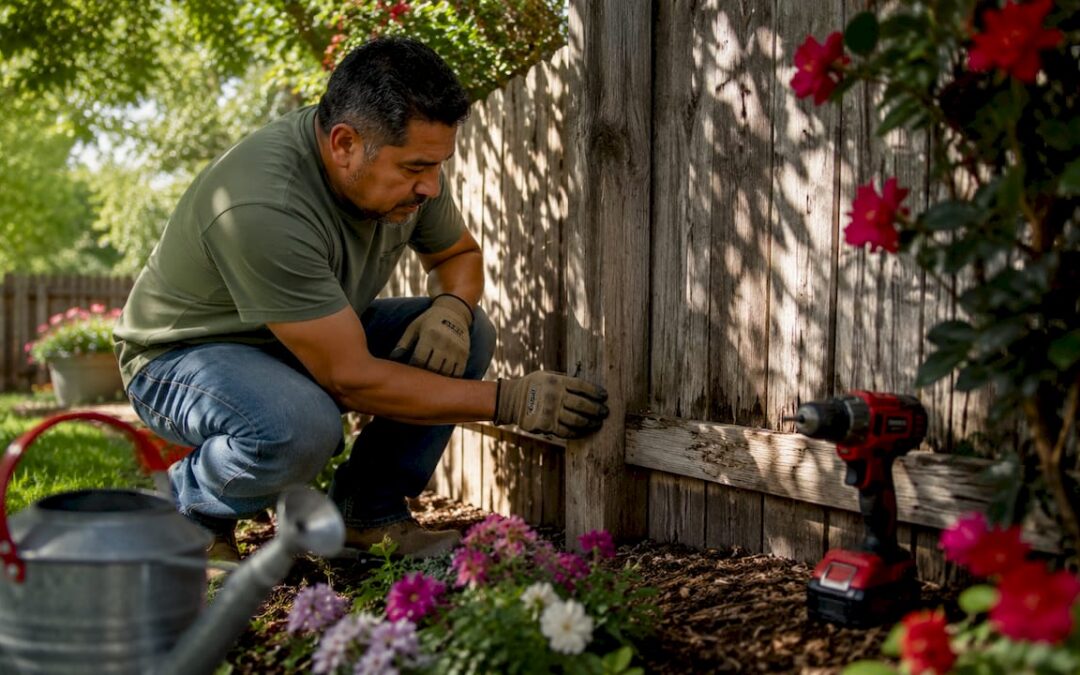
Fence maintenance is the process of routinely inspecting, cleaning, repairing, and protecting fence materials to maximize durability and preserve curb appeal. A neglected wood fence lasts just 7–10 years, but proactive maintenance extends that lifespan to 15–20 years. That difference represents thousands of dollars in avoided replacement costs. Arkansas homeowners face specific challenges: humid summers, clay-heavy soils, and occasional hard freezes all accelerate fence deterioration faster than the national average.
What does fence maintenance actually involve?
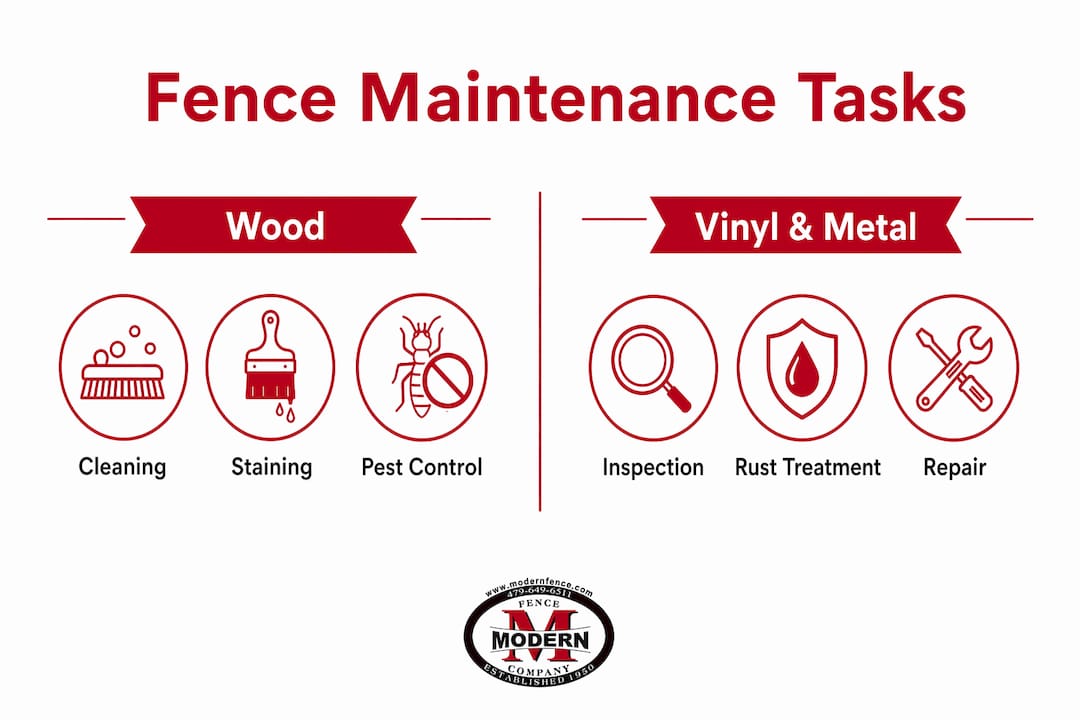
Fence maintenance covers four core tasks: inspection, cleaning, repair, and protective treatment. Each task applies differently depending on your fence material, and skipping any one of them shortens the fence’s useful life. The industry standard for wood fence staining and sealing is every 2–3 years, or sooner if water no longer beads on the surface. That simple water-bead test tells you more about your fence’s condition than a visual check alone.
Experts recommend fence line inspections at least twice a year to catch early signs of leaning posts, loose fasteners, rust, or mold. Catching these problems early costs far less than waiting until a panel fails or a post snaps. Property managers overseeing multiple fence lines should schedule inspections in spring and fall as standing calendar events.

Material-specific fence maintenance tasks
Different fence materials fail in different ways. Matching your maintenance routine to your fence type prevents the most common and costly problems.
Wood fence upkeep
Wood fences are the most maintenance-intensive option. They require cleaning, staining or sealing every 2–3 years, hardware tightening, and active moisture management. Maintaining 2–3 inches of clearance between the soil or mulch and the bottom rail prevents moisture from wicking into the wood and accelerating rot. Arkansas clay soils hold water longer than sandy soils, which makes this clearance especially critical here. Professional fence staining services apply the right product at the right time to protect wood grain from the inside out.
Vinyl fence maintenance tips
Vinyl fences need less work than wood, but they are not maintenance-free. Inspect them for cracks, warping, and post stability twice a year. UV exposure fades and weakens vinyl over time, so check for discoloration along the top rails where sun exposure is highest. Clean vinyl with mild soapy water and a soft brush. Avoid abrasive pads that scratch the surface and create grooves where mold takes hold.
Metal fence care
Metal fences, including wrought iron and chain link, require rust inspection and treatment every season. Check hardware connections and lubricate hinges and latches annually. Keep soil and mulch away from the base of metal posts, since ground contact accelerates corrosion. Chain link fencing benefits from periodic tension checks, since loose mesh sags and eventually pulls fasteners free.
Maintenance comparison by fence type
| Fence type | Cleaning frequency | Staining or sealing | Key risk |
|---|---|---|---|
| Wood | Annually | Every 2–3 years | Rot, moisture, insects |
| Vinyl | Annually | Not required | UV fading, cracking |
| Wrought iron | Annually | Touch up as needed | Rust, paint peeling |
| Chain link | Every 1–2 years | Not required | Rust, sagging mesh |
Pro Tip: Wood fence upkeep also benefits from quarterly pest inspections. Termites and carpenter ants attack fence posts from below grade, where damage is invisible until the post fails. A quarterly pest service schedule catches infestations before they reach the fence structure.
How and when to inspect and clean your fence
Inspect your fence at least twice a year, and always after a severe storm. Arkansas sees strong spring thunderstorms and occasional ice storms that shift posts and crack panels. A thorough walk-along inspection takes less than 30 minutes and catches problems before they compound.
What to look for during an inspection
- Leaning or heaving posts, especially along fence runs near drainage areas
- Loose or missing fasteners, screws, and nails
- Warped, cracked, or split boards on wood panels
- Rust spots or flaking paint on metal sections
- Mold or mildew growth, particularly on shaded fence runs
- Gate misalignment or sagging that prevents proper latching
- Soil or mulch buildup against the base of posts or rails
Cleaning methods by material
Cleaning removes the organic matter that holds moisture against fence surfaces. For wood, use a low-pressure wash at under 1,500 PSI with the nozzle held at least 12 inches from the surface. Higher pressure damages wood grain and opens channels for moisture and mold. For vinyl and metal, mild soapy water and a soft brush remove dirt without scratching. Professional fence cleaning services use equipment calibrated for each material, which removes buildup without surface damage.
Pro Tip: Never apply stain or sealant to damp wood. Staining on wet wood traps moisture inside the grain and causes internal rot. Wait at least three consecutive dry days before applying any protective coating.
Seasonal fence maintenance routines for Arkansas
Arkansas weather moves through four distinct seasons, and each one creates different risks for fence materials. A seasonal routine keeps tasks manageable and prevents the backlog that leads to expensive repairs.
| Season | Wood fences | Vinyl fences | Metal fences |
|---|---|---|---|
| Spring | Inspect for winter damage, clean, stain if due | Wash, check for cracks | Treat rust spots, lubricate hardware |
| Summer | Trim vegetation, check soil clearance | Inspect UV fading on top rails | Check for corrosion near sprinklers |
| Fall | Clear debris, check fasteners | Inspect posts for shifting | Remove leaves from base, check drainage |
| Winter | Check for heaving posts after freezes | Inspect for cracking in cold | Inspect for rust after ice events |
Spring is the most important season for wood fence upkeep. After Arkansas winters, posts may have shifted due to frost heave, which occurs when freezing temperatures push soil upward and displace fence posts. Early spring inspections catch frost heave damage before it causes gate misalignment or panel failure. Staining in spring, after three dry days, gives protective coatings the best chance to cure before summer humidity arrives.
Summer maintenance focuses on vegetation control. Vines, overgrown shrubs, and grass growing against fence rails hold moisture against the surface and accelerate rot and rust. Trimming plants and redirecting sprinklers away from fence lines is one of the most cost-effective maintenance steps a homeowner can take. Fall is the time to clear debris from the fence base and check that drainage around posts is not directing water toward the fence line. Winter requires minimal active maintenance, but a post-freeze walkthrough in january or february catches heaving before spring thaw makes it worse.
How do you know when to repair vs. replace a fence?
Repair is the right call when damage is isolated to one or two panels, a single post, or a gate mechanism. Replacement becomes necessary when rot, rust, or structural failure affects more than a third of the fence run, or when the fence is past its expected lifespan. Wood fences older than 15 years with widespread rot are rarely worth repairing section by section.
Warning signs that require professional attention
- Posts that lean more than a few degrees from vertical
- Boards that flex or bounce when pressed, indicating internal rot
- Rust that has spread beyond surface discoloration into the metal structure
- Gates that no longer latch or swing freely after adjustment
- Panels that have separated from posts at the fastener points
Pro Tip: Post stability depends heavily on soil type. Arkansas clay soils expand when wet and contract when dry, which works fence posts loose over time. If posts are heaving repeatedly in the same location, the fix is not just resetting the post. The drainage pattern around that post needs to change.
Addressing minor damage promptly prevents cascading failure. A single rotted post that goes unrepaired transfers load to adjacent posts, which then fail faster. Pool fences carry an additional layer of urgency: safety compliance requires self-closing and self-latching gates to function correctly at all times, regardless of cosmetic condition.
Key Takeaways
Consistent, material-specific fence maintenance is the single most effective way to extend fence life, prevent structural failure, and avoid costly replacement.
| Point | Details |
|---|---|
| Maintenance doubles fence lifespan | Proactive care extends wood fence life from 7–10 years to 15–20 years. |
| Stain every 2–3 years | Re-stain wood fences when water stops beading on the surface, or on a 2–3 year schedule. |
| Inspect twice yearly | Schedule inspections in spring and fall, and always after severe weather events. |
| Dry wood before staining | Wait three consecutive dry days before applying stain or sealant to prevent internal rot. |
| Manage soil and vegetation | Keep 2–3 inches of clearance at the fence base and trim plants away from fence rails. |
What I’ve learned from years of watching fences fail
The fences I see fail earliest are almost never the cheapest ones. They are the ones that received no attention after installation. A homeowner installs a quality cedar privacy fence, feels good about the investment, and then does nothing for five years. By year six, the bottom rails are soft, the posts are loose, and the stain has worn off entirely. The repair bill at that point often exceeds what consistent maintenance would have cost over the entire period.
The most overlooked maintenance step is environmental management. Redirecting a single sprinkler head away from a fence line, or cutting back one overgrown shrub, does more to prevent rot than any product applied after the damage starts. I have seen fences in full sun outlast shaded fences by years, simply because airflow kept the wood dry between rain events.
My other consistent observation is that homeowners wait too long to call for help. A leaning post is a warning. A failed post is an emergency. The cost difference between those two moments is significant. Scheduling a professional inspection once a year, aligned with your spring cleaning routine, catches problems at the warning stage. Modernfence has been doing exactly this kind of work across Western Arkansas for over 70 years, and the pattern holds without exception.
— mark
Modernfence fence care services in Fort Smith, AR
Modernfence provides professional fence cleaning, staining, repair, and installation across Western Arkansas and Eastern Oklahoma. Whether you have a wood privacy fence that needs its first re-stain or an iron fence with rust spots spreading toward the posts, the team at Modernfence handles the full scope of upkeep.

Scheduling a professional inspection before problems compound is the most cost-effective decision a property owner can make. Modernfence’s fence installation and maintenance guide covers the full lifecycle of residential and commercial fencing, from first post to long-term care. For wood fences specifically, Modernfence offers professional staining services using products matched to Arkansas climate conditions. Call for a free estimate and get your fence assessed before the next season changes.
FAQ
How often should I inspect my fence?
Inspect your fence at least twice a year, ideally in spring and fall. Always do an additional check after severe weather events like ice storms or high winds.
How do you maintain a wooden fence long-term?
Clean it annually, re-stain or reseal every 2–3 years, keep soil and mulch 2–3 inches below the bottom rail, and trim vegetation away from the fence line to maintain airflow.
Can I pressure wash my wood fence?
Yes, but keep the PSI under 1,500 and hold the nozzle at least 12 inches from the surface. Higher pressure damages wood grain and creates entry points for moisture and mold.
What is the best time of year to stain a fence in Arkansas?
Spring is the best time, after temperatures stabilize and before summer humidity peaks. Wait for at least three consecutive dry days before applying any stain or sealant.
When should I replace a fence instead of repairing it?
Replace the fence when structural damage affects more than a third of the run, when posts are repeatedly heaving due to drainage problems, or when a wood fence is past 15 years old with widespread rot.