
A fence can help a home sell faster, look more finished, and feel more secure – but not every fence adds value in the same way. If you’re asking what fence adds home value, the best answer is usually the one that fits the property, the neighborhood, and the buyer’s expectations without creating a future maintenance problem.
That means there is no single winner for every home. A six-foot privacy fence may be a strong selling point for a family with pets and kids, while a decorative iron fence may make more sense for a front yard where curb appeal matters most. The real value comes from matching material, style, and installation quality to the home itself.
What fence adds home value in real estate terms?
When people talk about added value, they often mean two different things. One is appraised value, which can be conservative and depends on the local market. The other is buyer appeal, which is often where a fence does the most work.
A good fence can improve privacy, define the lot, enhance appearance, and reduce obvious concerns about safety. Those benefits may not always show up dollar-for-dollar in an appraisal, but they can influence how buyers feel about the property. In many cases, that leads to stronger offers and less hesitation.
The wrong fence can have the opposite effect. A leaning wood fence, mismatched panels, cheap materials, or a style that feels out of place can make the yard look smaller or add one more project to the buyer’s list.
The best fence types for adding home value
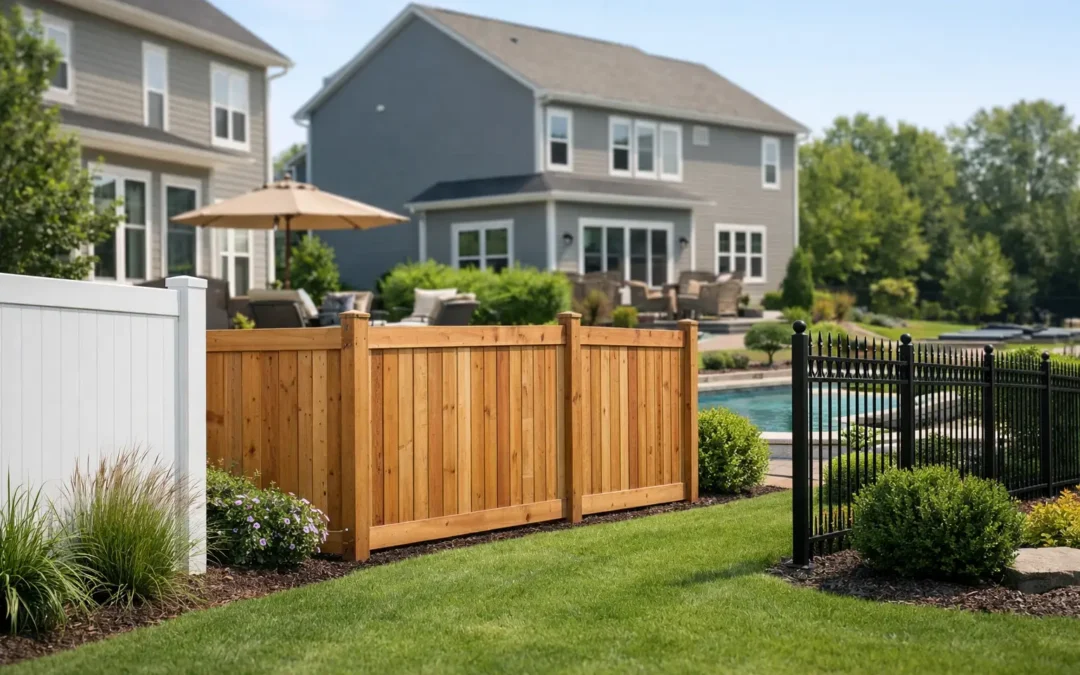
For most residential properties, the fences that tend to add the most value are wood privacy, vinyl privacy, and ornamental iron or aluminum-style fencing. Chain link can be useful and practical, but it usually adds less perceived value unless the setting calls for function over appearance.
Wood privacy fences
Wood remains one of the most popular choices for homeowners because it looks natural and gives buyers something they immediately understand – privacy. In backyards, especially, a well-built wood fence can make the outdoor space feel more usable and more private for children, pets, entertaining, or simply relaxing.
Wood often performs well on value because it balances appearance and cost. It can suit a wide range of home styles, from traditional to newer suburban builds. The trade-off is maintenance. If a buyer sees weathering, warping, or signs of deferred upkeep, the value boost drops quickly.
A professionally installed wood fence with straight lines, quality posts, and a clean finish is a different story. It signals that the property has been cared for.
Vinyl fences
Vinyl appeals to buyers who want a finished look without the upkeep that comes with wood. It resists rot, doesn’t need staining, and usually keeps a clean appearance longer with less effort. For many homeowners, that low-maintenance factor is a real advantage.
Vinyl can add strong value in neighborhoods where newer homes and polished exterior finishes are common. It works especially well when buyers are looking for privacy and a neat, consistent appearance. The main downside is that vinyl can feel less natural than wood, and lower-grade products may become brittle or fade over time.
Still, when quality materials are used and the style fits the house, vinyl often checks the right boxes for resale: privacy, durability, and ease of ownership.
Ornamental iron fencing
If the goal is curb appeal, ornamental iron is often one of the strongest choices. It creates a more upscale look, frames the property without closing it off visually, and can make the front of a home feel more refined. On higher-end homes, that can matter.
Iron-style fencing is usually not the best option when backyard privacy is the top priority, but it can add meaningful value where appearance, security, and architectural fit carry more weight. Buyers often respond well to the clean, permanent look.
The key is quality. Ornamental fencing should look intentional and well integrated with the home, not like an afterthought.
Chain link fences
Chain link is durable, cost-effective, and practical. For some buyers, especially those focused on pet containment or boundary definition, it serves an important purpose. It can absolutely be the right fence for the property.
But if the question is strictly what fence adds home value most, chain link usually ranks lower on appearance. It tends to deliver more functional value than emotional value. In a backyard where budget is the biggest concern, it may be the smart choice. In a market where aesthetics drive buyer decisions, other materials usually perform better.
Privacy usually adds the most value
If you strip away the material question for a moment, privacy is often the feature that buyers value most. A fenced backyard that feels secure and private tends to be more attractive than an open yard with no clear boundary.
That is especially true for homes with children, dogs, pools, patios, or outdoor living areas. Buyers are not just looking at the fence itself. They are imagining how they will use the space.
This is why wood and vinyl privacy fences often outperform more decorative options when resale is the main goal. They make the yard feel like an extension of the home.
Style matters as much as material
Even the best material can hurt value if the style is wrong for the property. A tall privacy fence in the front yard can feel closed off in some neighborhoods. A decorative metal fence in the backyard may look nice but fail to provide the seclusion buyers want. A fence that is too short, too tall, or visually out of balance with the house can make the project feel poorly planned.
The most valuable fences look like they belong there. They match the home’s scale, complement its exterior, and fit neighborhood expectations.
In established neighborhoods, buyers often respond best to fences that improve the property without standing out for the wrong reasons. Clean lines, consistent gates, and a finish that suits the home will usually do more for value than trendy details.
Installation quality has a direct effect on value
A fence is one of those upgrades where workmanship is easy to spot. Crooked posts, uneven pickets, dragging gates, or poor alignment can take a project from asset to liability fast.
Professional installation matters because buyers notice the finish, but also because the hidden parts of the job affect long-term performance. Proper post depth, attention to grade changes, material selection, and gate construction all influence how the fence holds up over time.
That is especially relevant in areas where weather, soil movement, and drainage can test a fence year after year. A well-built fence feels solid from day one and keeps looking that way longer.
The neighborhood sets the ceiling
One of the biggest mistakes homeowners make is overbuilding for the area. If most nearby homes have simple wood privacy fences, an expensive custom fence may not return its full cost at resale. On the other hand, if neighboring properties all have attractive, well-maintained fencing, having no fence or an outdated one can put your home at a disadvantage.
This is where local experience matters. Buyers in Western Arkansas and Eastern Oklahoma do not all want the same thing, and terrain, lot size, and neighborhood norms can change from one area to the next. The best value comes from choosing a fence that improves the property without overshooting the market.
When a fence may not add much value
There are times when a new fence is more about usability than resale. If the backyard is very small, if the fence blocks a view buyers would want to keep, or if local buyers do not place much importance on fenced yards, the return may be modest.
A fence can also add less value if it creates extra maintenance, violates neighborhood expectations, or looks too specialized. For example, a highly customized design that reflects one owner’s taste may not appeal to a broad group of buyers.
That does not mean the project is a bad idea. It just means value should be measured in daily use as well as future resale.
So, what fence adds home value most?
For the average homeowner, a professionally installed wood or vinyl privacy fence often delivers the best balance of buyer appeal, function, and appearance. If curb appeal and a more upscale look are the priority, ornamental iron can be a strong value booster in the right setting. Chain link remains a practical option where budget and function come first, but it usually adds less visual appeal.
The best choice depends on your home, your lot, and what buyers in your area actually expect. A fence should make the property feel more complete, more secure, and easier to enjoy – not just more expensive.
If you’re considering a fence for resale or long-term use, it helps to think beyond material alone. The strongest return usually comes from a fence that looks right, performs well, and is built to last. That kind of improvement rarely goes unnoticed.