
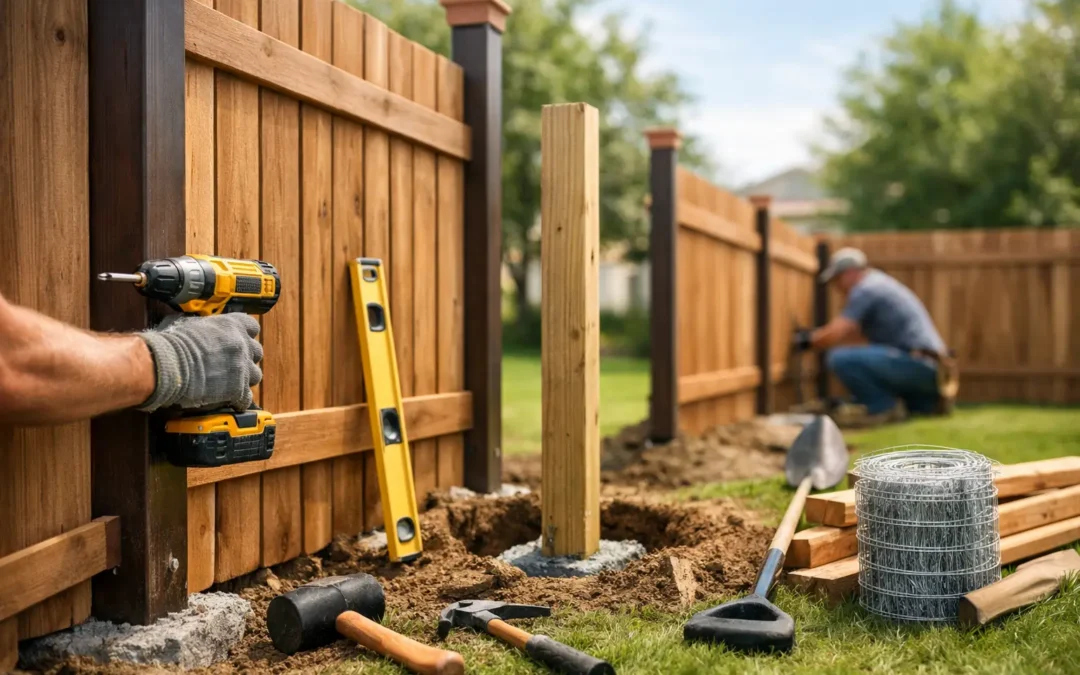
A fence can look simple from the street, but anyone who has dealt with leaning posts, sagging gates, or a property line dispute knows better. A solid fence installation guide starts before the first hole is dug. The right plan protects your investment, helps the project move faster, and gives you a fence that performs well for years.
For homeowners, that often means balancing privacy, appearance, and maintenance. For commercial properties, the priorities may shift toward security, controlled access, durability, and code compliance. In both cases, the same principle applies: good installation matters as much as the material you choose.
What a fence needs to do first
Before selecting a style, get clear on the job your fence needs to handle. A backyard privacy fence has different demands than a chain link perimeter around a warehouse or a temporary barrier around an active jobsite. If the purpose is not defined early, it is easy to choose a fence that looks right but does not solve the real problem.
Privacy is one of the most common goals for residential projects, especially in neighborhoods where homes sit close together. Security is another major reason, whether that means keeping children and pets safely contained or discouraging unwanted access. Some property owners are focused on curb appeal and want a fence that complements the architecture of the home or business. Others need to mark boundaries clearly, manage traffic flow, or support access control systems.
When the purpose is clear, the material and layout become easier to narrow down.
Choosing the right material in this fence installation guide
The best fence material depends on how you want the fence to perform over time. Every option has strengths, and every option comes with trade-offs.
Wood fencing
Wood remains a popular choice because it offers strong privacy, a classic appearance, and plenty of design flexibility. It can be customized in height, picket style, and finish, making it a good fit for many homes. The trade-off is maintenance. Wood fences typically need staining, sealing, or periodic repairs to keep them looking good and holding up against moisture, sun, and normal aging.
Chain link fencing
Chain link is practical, cost-effective, and well suited for both residential and commercial use. It is often selected for security, boundary definition, and low maintenance. It does not provide much privacy on its own, although privacy slats or screening can help in some situations. For commercial sites, storage yards, and utility areas, chain link is often one of the most efficient choices.
Iron and ornamental metal fencing
Iron fencing delivers strength, visibility, and a more finished architectural look. It is often used on front property lines, around commercial sites, and anywhere a customer wants security without fully closing off the view. It usually costs more upfront than wood or chain link, but it offers long-term durability and a strong visual impression.
Vinyl fencing
Vinyl appeals to property owners who want a clean appearance with less routine upkeep. It resists rot, does not require painting, and works well for privacy or decorative applications. The main consideration is impact resistance and installation quality. Vinyl can perform very well, but posts and panels need to be installed with precision to avoid movement or alignment issues later.
Site conditions can change the whole project
One of the biggest mistakes people make is assuming every yard or property installs the same way. It does not. Soil conditions, slope, drainage, obstacles, and access all affect the design and labor involved.
A flat backyard is usually more straightforward than a property with steep grade changes. Sloped terrain may require stepped panels, racked panels, or custom adjustments to keep the fence secure and visually consistent. Rocky ground can slow digging and change how posts are set. Wet areas may call for extra attention to drainage and post stability. Trees, roots, retaining walls, and existing structures can all affect layout decisions.
Commercial projects often bring a different set of challenges, including larger perimeters, gate placement for vehicle traffic, and coordination with access control equipment. These details should be addressed before work begins, not improvised during installation.
Property lines, permits, and utilities
A reliable fence installation guide has to include the administrative side of the job. That is the part many people want to skip, and it is also where expensive mistakes happen.
Property lines should be verified before the layout is finalized. Installing even a few inches onto a neighboring property can create unnecessary conflict and lead to costly corrections. If there is any uncertainty, a survey is often worth the investment.
Permits and local requirements also matter. Fence height, location, visibility near driveways, and gate rules can vary by municipality, neighborhood restrictions, or property type. A commercial property may face additional standards depending on use and occupancy.
Utility locating is not optional. Digging without confirming underground lines can damage utility service, delay the project, and create safety risks. Water, electric, gas, cable, and irrigation lines all need to be considered before any post holes are dug.
Why the post installation matters so much
If there is one part of a fence that determines long-term performance, it is the posts. Panels, rails, and pickets are visible, but posts do the real structural work. When posts are spaced incorrectly, set too shallow, or placed in unstable ground, the entire fence can start failing early.
Proper post depth depends on the fence type, height, soil conditions, and expected load. A privacy fence that catches wind has different demands than a short decorative run. Gate posts need even more attention because gates create repeated movement and concentrated stress. A gate that drags after one season is often a sign that the support was not built for the load.
Concrete setting, alignment, spacing, and cure time all matter. So does straight layout. Small errors in the early stages can become obvious by the time the fence is complete.
Gates, access, and daily use
A fence is only as functional as its gates. People often focus on the fence line and treat the gate as an afterthought, but gates are where convenience and frustration usually show up first.
Think about how the opening will be used every day. A homeowner may need simple walk access plus a wider gate for lawn equipment. A business may need controlled entry, vehicle clearance, panic hardware, or integration with access control systems. Width, swing direction, grade, latch placement, and hardware quality all affect performance.
It is also worth planning for future use. If there is any chance you will need equipment access later, building the right gate now is usually easier than modifying the fence later.
Common installation mistakes to avoid
The most common fence problems are predictable. Rushing layout is one of them. When corners, transitions, and gate openings are not measured carefully, the finished fence can look uneven and function poorly.
Another issue is choosing material based only on upfront cost. A lower initial price can make sense in some cases, but only if it still meets the property’s needs. If a fence needs frequent repairs, staining, or early replacement, the long-term value changes quickly.
Poor drainage planning is another avoidable problem. Water pooling around posts or running under fence lines can affect stability over time. Skipping maintenance expectations is also a mistake. Even durable materials benefit from inspection and occasional care.
The last major issue is underestimating installation complexity. A fence may look like a straightforward weekend project until the crew hits roots, slope changes, buried lines, or gate alignment issues. Experience matters because site conditions rarely stay simple from start to finish.
When professional installation makes more sense
Some small, basic fence projects can be handled by capable property owners. But many installations benefit from professional planning and execution, especially when the property has grade changes, longer runs, specialty materials, security requirements, or large gates.
Professional installation helps reduce surprises. It also improves speed, finish quality, and long-term performance. For commercial sites, it can be especially valuable when the project involves access control, temporary fencing, custom fabrication, or coordination with other trades.
That is where a contractor with regional experience brings real value. In Fort Smith and across Western Arkansas and Eastern Oklahoma, Modern Fence Company has seen the local soil conditions, weather patterns, property layouts, and practical installation issues that can affect a project. That kind of experience helps customers get a fence that fits the site instead of forcing the site to fit a standard template.
How to use this fence installation guide when planning your project
Start by defining your priority: privacy, security, appearance, containment, access, or a combination of those goals. Then look at the site honestly. Consider terrain, drainage, utilities, traffic patterns, and long-term maintenance. From there, match the material to the job instead of choosing based on appearance alone.
It also helps to think beyond the fence itself. Ask how the gates will be used, whether controlled access may be needed later, and how the fence will look and perform five or ten years from now. A good fence is not just installed for today. It should continue working as the property changes.
The best projects usually begin with clear expectations and good information. When the plan is right from the start, the finished fence has a better chance of doing exactly what you need it to do, with fewer repairs, fewer frustrations, and better value over time.