A weak gate latch, a fence line hidden by overgrowth, or an unprotected service entrance can create bigger problems than a damaged section of fence. For businesses, commercial perimeter upgrades are not simply cosmetic improvements. They help define property boundaries, control who enters, protect equipment, and give employees, customers, and tenants greater confidence in the site.
The right solution depends on what happens on your property each day. A warehouse with delivery traffic needs different access control than an apartment community, medical office, school, contractor yard, or retail location. The most effective projects begin by looking at the whole perimeter rather than replacing fence panels one at a time.
Start With the Risks at Your Property
A commercial perimeter should support the way your business operates. Before selecting a material or gate system, identify the areas where people, vehicles, inventory, and visitors move through the site. Walk the property during normal operating hours and again after dark if possible. What appears secure in daylight may reveal blind spots, poor visibility, or uncontrolled access at night.
Consider where unauthorized entry would cause the greatest disruption. For some businesses, that is a rear loading area with stored materials. For others, it is a pool enclosure, equipment yard, dumpster area, parking lot, or employee entrance. A fence upgrade is most useful when it addresses a specific vulnerability instead of adding height or hardware without a clear purpose.
It also helps to separate public-facing areas from restricted ones. Customers should be able to find the right entrance without encountering confusing barriers, while staff-only zones should have clear boundaries and dependable access controls. Good perimeter design protects the property without making normal business activities harder.
Choose Commercial Perimeter Upgrades for the Site
Fence material affects security, appearance, maintenance needs, and cost. There is rarely one correct choice for an entire property. Many commercial sites benefit from combining materials based on visibility, security requirements, and the character of each area.
Chain Link for practical security
Chain link remains a dependable option for equipment yards, industrial facilities, storage areas, athletic spaces, and construction sites. It offers visibility across the property line, handles demanding conditions well, and can be installed in a range of heights. Privacy slats, screening, barbed wire where appropriate, and heavier commercial-grade fabric can increase security when the application calls for it.
The trade-off is appearance. Standard chain link may not be the preferred choice along a highly visible street frontage or near a customer entrance. In those areas, black vinyl-coated chain link, ornamental iron, or a combination of fencing and landscaping may better suit the property.
Ornamental iron and custom metal for visible areas
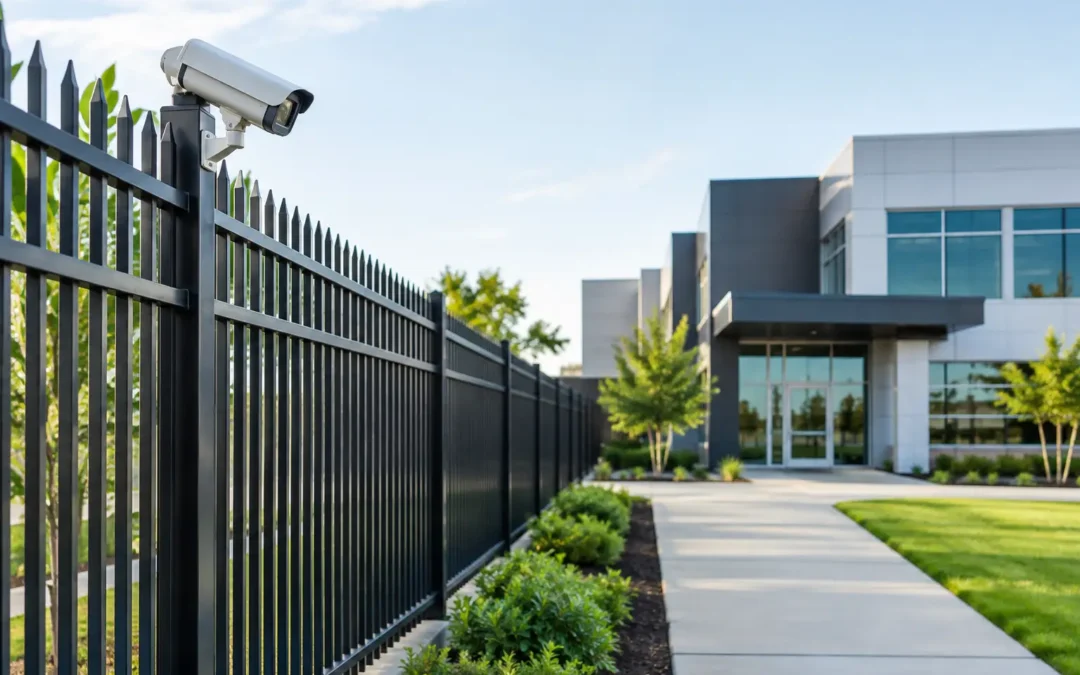
Ornamental iron fencing provides a more polished appearance while maintaining sightlines. It works well around office buildings, retail properties, multifamily communities, entry features, and secured pedestrian areas. Properly designed metal fencing can make the front of a commercial property feel established and well cared for without sacrificing boundary control.
Custom metal fabrication can be especially valuable when standard panels do not fit the site. Sloped terrain, unusual gate openings, masonry columns, and branded entry features often require a more tailored approach. A properly fabricated solution should fit the property rather than forcing the property to fit a catalog-sized product.
Vinyl and wood where privacy matters
Vinyl and wood fencing can create useful privacy around service areas, patios, mechanical equipment, or tenant spaces. These materials are often selected for their finished appearance, but they should be matched carefully to commercial use. A busy property with frequent deliveries, vehicle traffic, or exposure to heavy wear may need reinforced posts, protective bollards, or a more impact-resistant material in vulnerable locations.
Wood offers a traditional look and can be stained for added protection. Vinyl has consistent color and lower routine maintenance requirements. Neither is automatically better. The surrounding environment, expected wear, and desired appearance should guide the decision.
Gates Are Often the Most Important Part of the System
A strong fence does little good if the gate does not close, latch, or operate reliably. Gates are the moving parts of a perimeter system, which means they deserve special attention during planning.
Start with how the opening will be used. A pedestrian gate may need a self-closing hinge and controlled entry hardware. A service drive may require a double swing gate, cantilever slide gate, or automatic operator based on available space and traffic patterns. Gate width matters too. A gate sized for passenger vehicles may be too narrow for delivery trucks, trailers, emergency access, or maintenance equipment.
Access control can turn a gate from a basic barrier into an operational tool. Keypads, card readers, telephone entry systems, remote controls, and controlled exit devices allow a business to manage entry without leaving gates open for convenience. The best option depends on who needs access, how often access changes, and whether the site is staffed after hours.
Automation brings convenience, but it also requires thoughtful installation and maintenance. Operators need appropriate safety devices, reliable power, proper drainage around the gate path, and enough structural support for the gate itself. A low-cost operator installed on an undersized or poorly aligned gate can create recurring service issues. It is usually wiser to build the gate correctly first and add automation designed for its weight and usage.
Do Not Overlook Site Conditions
Commercial fencing projects in Western Arkansas and Eastern Oklahoma often involve practical site challenges. Grade changes, rocky soil, drainage paths, utility lines, concrete surfaces, and limited access for equipment can affect the installation plan. These details are not minor. They influence post depth, fence alignment, gate operation, project timeline, and long-term durability.
Drainage deserves particular attention around gates and low fence lines. Standing water can affect gate movement, contribute to soil erosion, and create maintenance problems over time. Likewise, fencing installed across uneven terrain may need stepped panels, racked panels, retaining considerations, or custom fabrication to avoid large gaps at the bottom.
A professional site review should also account for local codes, property lines, easements, fire access, and utility locations. Commercial property owners may need approval from a landlord, property manager, municipality, or homeowners association before work begins. Addressing these issues early helps avoid costly changes after materials are ordered.
Plan for Appearance as Well as Protection
Security and curb appeal do not compete when the perimeter is planned well. A clean, straight fence line and properly hung gates send a message that the property is actively managed. That matters to customers, tenants, employees, and potential intruders alike.
Front-facing portions of the property may call for a different finish than the rear service area. For example, ornamental iron can define an entry while chain link protects a screened loading zone behind the building. Privacy fencing can conceal waste containers or mechanical equipment, reducing visual clutter without blocking required access.
Maintenance is part of the appearance decision. Fence cleaning, staining, hardware adjustments, and prompt repairs preserve the investment and prevent small problems from becoming security gaps. A leaning post or dragging gate may seem minor, but it can quickly become an access problem or safety concern in a busy commercial setting.
Build a Project Around Long-Term Value
The lowest initial quote is not always the lowest-cost option over the life of the fence. Commercial properties place more demand on materials, posts, hinges, latches, and gate operators than most residential locations. Selecting components based only on upfront price can lead to early repairs, difficult operation, and replacement sooner than expected.
Ask about the intended grade of materials, post setting method, gate framework, hardware, and how the system will handle daily use. The answers should be specific to your property. A lightly used office gate and a high-traffic contractor yard should not receive identical recommendations.
A phased approach can make sense when a full property upgrade is not in the current budget. Address the most exposed access points first, then plan future sections around a consistent design. This protects the areas of greatest concern while giving the property a clear path forward.
For more than 70 years, Modern Fence Company has helped property owners evaluate fencing, gates, access control, and custom metal solutions based on real site conditions. A detailed estimate and on-site conversation can turn a general security concern into a practical plan that protects your property, supports daily operations, and continues to look professional for years to come.