
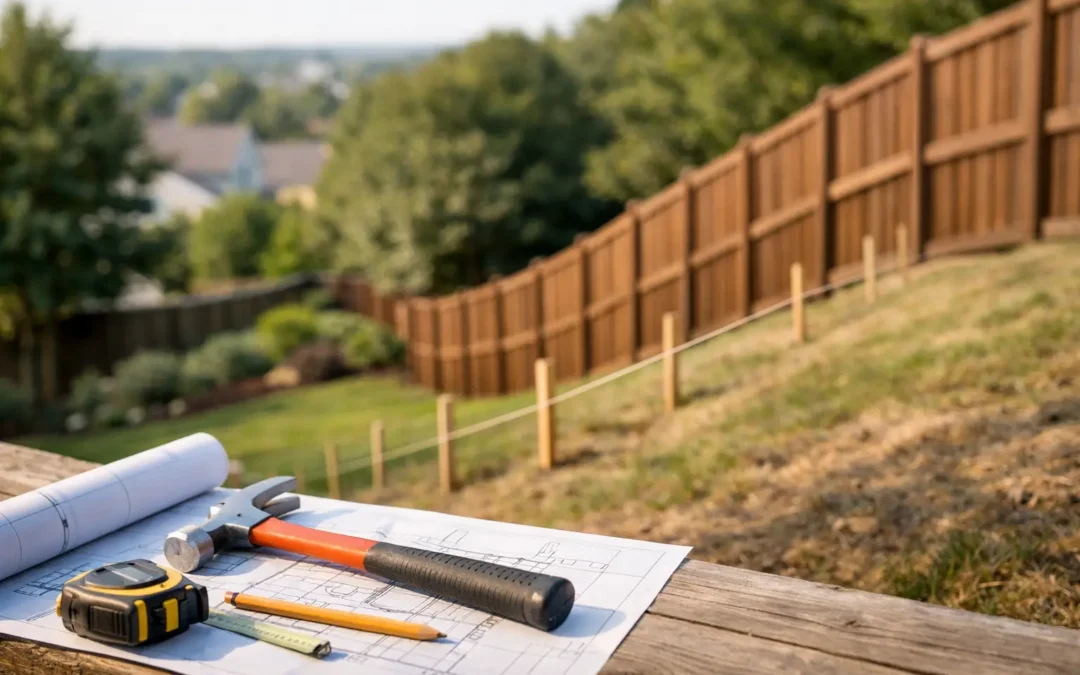
A sloped yard fence project can turn an awkward hillside, rolling backyard, or uneven property line into a secure, finished-looking space. It can also expose every shortcut in the installation process. Panels that climb too steeply leave gaps at the ground, posts set at inconsistent depths can shift, and a fence that looks acceptable on paper may feel uneven from the street. The right plan accounts for the grade before the first post hole is dug.
For homeowners and property managers, the goal is not simply to get a fence from point A to point B. It is to create a perimeter that holds up to weather, provides the intended privacy or security, and suits the way the property naturally moves. That takes accurate layout, the right materials, and an installation method matched to the slope.
Start With the Grade, Boundaries, and Purpose
A slope can look minor until a straight fence line reveals it. Before choosing a fence style, walk the proposed line and identify where the ground rises, drops, levels out, or changes direction. A contractor can measure the elevation changes precisely, but property owners can also spot major concerns by stretching a string line between planned corners and checking the changing distance from the string to the ground.
The grade is only one part of planning. Confirm the property line, review any neighborhood requirements, and have underground utilities marked before excavation begins. On a sloped site, moving a line a few feet to avoid a utility, drainage swale, tree root system, or retaining wall may change both the fence design and the amount of material required.
The fence’s job matters just as much. A backyard privacy fence needs to block sight lines without leaving large openings below the pickets. A chain link fence may be intended to contain pets or define a commercial boundary. Ornamental iron may be selected to preserve a view while providing a durable, elegant perimeter. Each material handles elevation changes differently.
Choose Between Stepped and Racked Fence Installation
Most sloped fencing uses one of two approaches: stepped installation or racked installation. Neither is automatically better. The correct choice depends on the steepness of the grade, the fence material, the desired appearance, and what needs to be contained or screened.
Stepped fences follow level sections
A stepped fence uses level panels or rails that drop down in increments as the ground slopes. It creates a stair-step appearance, with each section remaining horizontal between posts. This is a common solution for wood privacy fencing because standard wood rails and pickets are naturally suited to a level layout.
Stepping can look clean and intentional, especially on moderate slopes. It also allows installers to keep a consistent fence height within each section. The trade-off is the space beneath the lower end of each panel. On a noticeable grade, that gap can be large enough for a small dog to get through or for debris to collect.
The gap can sometimes be addressed by adjusting the layout, extending pickets, adding a rot board, grading small areas, or using carefully designed retaining features. The right correction depends on drainage. Filling low areas without considering runoff can direct water toward the fence posts or a home’s foundation.
Racked fences follow the contour of the land
A racked fence, sometimes called a raked fence, angles with the slope. The rails and pickets follow the grade rather than staying level, creating a closer fit to the ground. This approach is often practical for chain link and many vinyl or ornamental fence systems designed to rack within a specified range.
Racking can reduce ground gaps and give a smoother visual line across a gradual slope. It is especially useful where pet containment is a priority or where the property line rises steadily from one side of the yard to the other. However, every fence system has limits. Pushing a panel beyond its designed rack angle can distort the structure, create uneven spacing, or put excess stress on fasteners and posts.
Wood fencing can also be built to follow a slope, but it typically requires custom rail cuts, careful picket placement, and experienced layout. On steep grades, a stepped design may still be the more durable and attractive option.
Post Depth Is the Foundation of a Strong Fence
A fence on uneven ground is only as dependable as its posts. Slopes can create added pressure from soil movement, water flow, and wind exposure. Posts must be installed at a consistent structural depth below grade, even when the visible portion of each post changes with the terrain.
A common mistake is measuring every post hole from the high side of the slope or setting posts based only on the desired top-of-fence line. That can leave some posts too shallow, particularly on the downhill side. Proper installation considers the finished fence height, the grade at each post, soil conditions, and the fence material before determining the hole depth and concrete placement.
Drainage deserves attention here. Water naturally travels downhill, and concentrated runoff can erode soil around posts over time. If the fence line crosses a drainage path, the solution may involve adjusting post placement, allowing appropriate clearance at the ground, or coordinating the fence plan with drainage improvements. A fence should work with the land, not trap water where it does not belong.
Material Selection Changes the Options
Wood, vinyl, chain link, and ornamental iron all offer benefits on sloped ground, but they should not be treated as interchangeable.
Wood remains a strong choice for privacy, warmth, and design flexibility. It can be stepped, custom-built around grade changes, and finished with staining that complements the property. Its flexibility is an advantage, although quality lumber, sound fastening, and well-set posts are essential for long-term performance.
Vinyl can deliver a crisp, low-maintenance appearance, but not every vinyl panel can rack. Some systems need stepped installation, while others are engineered to follow a gradual slope. Confirm the product’s capabilities before selecting it for a rolling yard.
Chain link is highly adaptable and practical for containment, security, and larger properties. Its fabric can follow many grades more naturally than rigid panels, though terminal posts, line posts, tension wire, and gates still require careful alignment. It is often a sensible choice when the goal is durable function across uneven terrain.
Ornamental iron and steel fencing can add security and curb appeal while preserving views. Many styles can rack to a limited degree, and fabricated sections may be appropriate for unusual transitions. On demanding sites, custom metal fabrication can provide a more precise fit than forcing standard panels into a layout they were not designed to handle.
Gates Need Their Own Slope Strategy
Gates are frequently the point where a well-installed sloped fence becomes frustrating to use. A gate needs enough clearance to swing without dragging the ground, yet too much clearance can compromise pet containment or security. A gate placed directly on a steep slope may require special planning, a level landing area, or a different gate configuration.
For a pedestrian gate, installers may level a small section of ground or use a design that opens toward the downhill side when practical. Double gates for driveways require even more precision because both leaves must meet correctly and remain stable over time. The gate posts should be sized and set to carry the additional weight and repeated movement.
Do not assume a gate can simply be added after the main fence is complete. Its location, swing direction, clearance, and hardware should be part of the original layout.
Why Professional Layout Saves Time and Materials
A sloped yard makes small measurement errors more visible. One post that is out of line can create a crooked run. One poorly planned transition can make a fence height look inconsistent. Correcting either issue after concrete cures can add unnecessary cost and delay.
Experienced installers use layout methods that establish straight lines, planned elevation transitions, consistent top lines, and reliable post placement before construction moves forward. They also understand when a slope calls for a standard approach and when it calls for custom work. This matters on residential lots, apartment properties, commercial sites, and acreage alike.
Modern Fence Company has served the Fort Smith area and surrounding Western Arkansas and Eastern Oklahoma communities for decades, bringing the practical judgment needed for challenging grades, material choices, and property-specific fence layouts. Licensed and insured installation provides added confidence when a project involves uneven terrain, utilities, gates, or a security-focused perimeter.
A sloped yard should not force you to settle for a fence that looks improvised or performs poorly. With a thoughtful layout and a fence system suited to the terrain, the finished line can feel like it has always belonged there.