
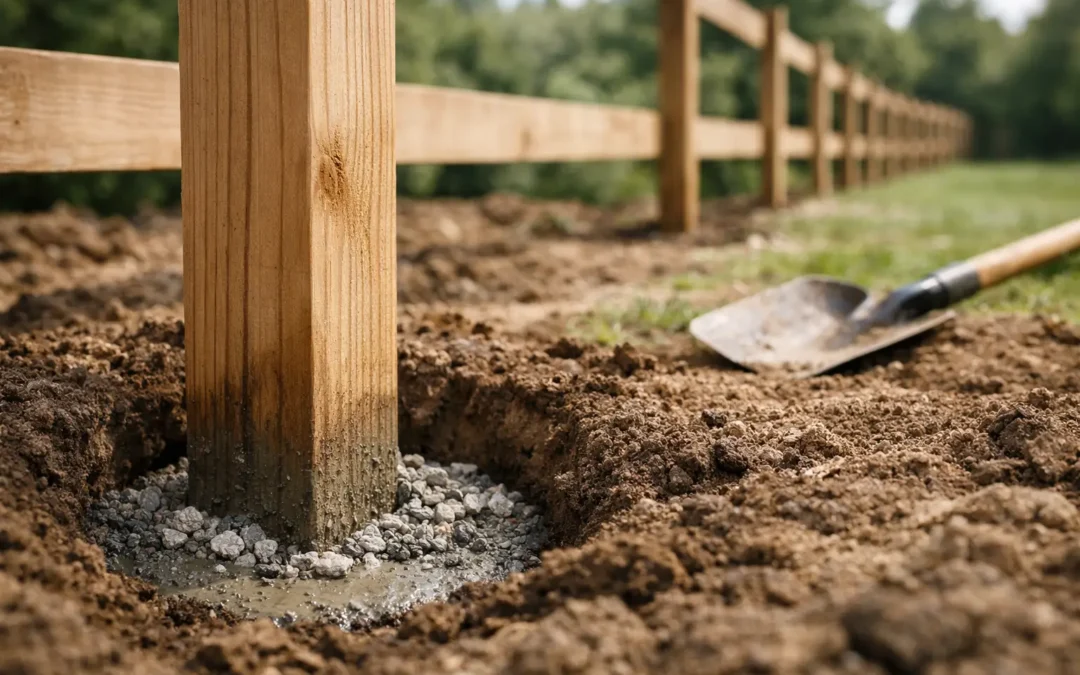
A fence can look straight and solid on installation day, then begin leaning after its first season of heavy rain, wind, and shifting soil. In most cases, the problem starts below ground. Homeowners often ask, how deep should fence posts be to hold up over time? The answer depends on fence height, material, soil conditions, wind exposure, and whether the post supports a gate or corner.
For many residential fences, the practical rule is to set posts at least one-third of the total post length in the ground. That usually means a 6-foot privacy fence needs posts buried about 2 to 3 feet deep. Taller fences, heavy materials, slopes, gates, and commercial applications often require deeper holes and a more deliberate installation plan.
How Deep Should Fence Posts Be? Start With Fence Height
A reliable starting point is to bury approximately one-third of the post and leave two-thirds above grade. For a standard 6-foot wood privacy fence, installers commonly use an 8-foot post and set it 24 to 30 inches deep. A 3-foot decorative fence may need a 5-foot post set roughly 18 to 24 inches deep, while an 8-foot privacy fence generally calls for a 10- to 12-foot post installed 3 feet or more below grade.
This guideline is a starting point, not a shortcut. A post that is technically deep enough can still fail if the hole is too narrow, the soil is unstable, the post is undersized, or the fence carries more wind load than expected. Solid-board privacy fences catch wind like a sail, so they need more support than an open-picket or chain link fence of the same height.
For a quick reference, these depths are common for properly planned projects:
- A 4-foot fence usually needs posts set 18 to 24 inches deep.
- A 6-foot fence typically needs posts set 24 to 30 inches deep.
- An 8-foot fence often needs posts set 36 inches deep or deeper.
- Gate, corner, and end posts may need additional depth, larger posts, and wider concrete footings.
Local codes, property requirements, and soil conditions can change the final specification. A professional installer evaluates the entire fence line rather than applying one number to every post.
Why Depth Matters More Than Appearance
Fence posts do more than hold fence panels upright. They transfer the pressure from wind, gates, uneven terrain, and everyday use into the ground. When a hole is too shallow, the soil around the post has less resistance to lateral movement. The fence may rack, sag, lean, or pull posts out of alignment.
Depth is especially important at the points where force concentrates. Corners change the direction of the fence line. End posts resist tension. Gate posts carry the weight of the gate each time it opens and closes. These posts should never be treated like ordinary line posts.
A shallow post may seem stable at first, particularly in dry ground. Over time, rain softens the soil, seasonal moisture causes expansion and contraction, and wind repeatedly works the post back and forth. Once movement begins, the fence’s fasteners, rails, panels, and gates are more likely to develop problems as well.
Soil, Drainage, and Weather Can Change the Plan
The ground in Western Arkansas and Eastern Oklahoma can vary widely from one property to another. A post set in firm, well-draining soil behaves differently than one installed in loose fill, heavy clay, rocky ground, or a low area that stays wet. Soil conditions are one reason experienced installation matters.
Clay soils can hold moisture and shift as conditions change. Sandy or disturbed soils may not provide enough side support without a wider hole or improved footing. Rocky areas can make digging difficult, but that does not mean a shallow hole is acceptable. It may require specialized equipment, a revised layout, or another installation approach to achieve a secure result.
Drainage deserves close attention with wood fencing. Water that collects around a post accelerates decay, even when pressure-treated lumber is used. Proper grading, a well-prepared hole, and sound concrete practices help limit prolonged moisture exposure. Concrete should support the post without creating a basin that directs water toward the wood.
Frost depth also matters in regions that experience freezing temperatures. While deep frost is less common here than in northern states, local conditions and project requirements should still be considered. Posts that are not installed appropriately for the site can move as soil freezes and thaws.
Hole Width Is Part of the Equation
A deep, narrow hole does not always provide the support a fence needs. As a general installation principle, the hole should be several times wider than the post. A common approach is a hole around three times the width of the post, giving enough room for concrete or compacted backfill to stabilize it.
For example, a standard 4-by-4 wood post may use a hole roughly 10 to 12 inches wide, depending on the fence design and ground conditions. Larger 6-by-6 posts for heavy gates or major structural points need wider footings. Commercial chain link terminal posts, access-control gates, and security fencing are often specified according to the post diameter, fence height, and manufacturer or engineering requirements.
The goal is not simply to use more concrete. The goal is to create a properly sized footing that resists movement and supports the specific fence system. Too little material can lead to instability; poor drainage or incorrect concrete placement can create avoidable problems later.
Different Fence Materials Need Different Support
Wood privacy fences are among the most demanding residential installations because their solid panels carry substantial wind pressure. A 6-foot wood fence often needs 4-by-4 or 6-by-6 posts set 2 to 3 feet deep, with stronger posts and deeper footings at gates and corners.
Vinyl fencing can look lighter, but its posts and panels still need a stable foundation. Vinyl systems rely on accurate spacing and plumb posts to keep rails properly aligned. In windy locations or with taller privacy-style vinyl panels, the post depth and concrete footing become especially important.
Chain link fencing creates less wind resistance because of its open mesh, but the terminal posts still carry significant tension. Line posts may have different footing requirements than corner, end, and gate posts. A chain link gate that drags or will not latch is often a sign that its supporting posts were not installed deeply or securely enough.
Ornamental iron and custom metal fencing need careful layout because small alignment errors are easy to see. The material may be open, but heavier panels, masonry transitions, slopes, and gates can add structural demands. The right depth keeps the fence plumb and preserves the clean, finished appearance clients expect.
Gates Need More Than Standard Posts
If a fence includes a walk gate, double-drive gate, or automated entry gate, plan for it before holes are dug. Gate posts support weight, movement, and leverage that ordinary line posts do not. A gate that is too heavy for its posts can pull them inward, causing misalignment, latch problems, and premature hardware wear.
For many wood gates, 6-by-6 posts set deeper than adjacent line posts provide better long-term support. Larger drive gates and access-control systems may require steel posts, larger concrete footings, bracing, or engineered specifications. The bigger the opening and the heavier the gate, the less room there is for guesswork.
Avoid the Installation Mistakes That Cause Early Failure
The most common fence-post mistake is using a standard depth for every situation. A short garden fence, a 6-foot privacy fence, and a commercial security perimeter should not be installed to the same specification. Another frequent issue is failing to account for slopes. On uneven terrain, post heights and hole depths must be planned from finished grade so the top of the fence remains level or follows the intended contour.
Skipping utility location is another costly error. Before digging, property owners should arrange for underground utility lines to be marked and confirm any setback, easement, or neighborhood requirements. This protects people, infrastructure, and the project schedule.
It also pays to inspect post condition and alignment during installation. Wood posts should be suitable for ground contact, straight, and properly supported while the footing sets. Each post must be checked for plumb as the work progresses. Correcting a post immediately is far easier than rebuilding a section of fence later.
When Professional Installation Is Worth It
A straightforward fence on level ground may seem like a manageable project, but the hidden details often determine whether it lasts five years or decades. Difficult soil, drainage concerns, retaining walls, steep grades, large gates, commercial security needs, and utility conflicts call for experienced planning.
Modern Fence Company has served property owners across the Fort Smith area since 1950, with the equipment and field experience to address those site-specific challenges. A professional estimate can account for fence style, post size, footing depth, gate requirements, and the conditions unique to the property before work begins.
The right post depth is the foundation of a fence that stays straight, secure, and attractive through changing weather. Before setting the first post, match the installation plan to the fence’s height, material, purpose, and the ground beneath it.