

Arkansas has no single statewide residential fence code. Your city or county sets the rules on height, setbacks, permits, and which side of the fence faces your neighbor. Before you dig a single post hole, confirm your local ordinance, order a professional land survey if the fence runs near a property line, and call Arkansas 811 to locate underground utilities.
Your three-step checklist before any fence project:
- Confirm local ordinance — contact your city or county planning/building department for height limits, setbacks, and permit requirements
- Get a survey or written neighbor agreement — never rely on an existing fence line to establish your legal boundary
- Call 811 before you dig — Arkansas law requires utility notification before any excavation
Table of Contents
- What do Arkansas fence laws actually require?
- Property lines, surveys, and the “7-year fence” question
- Oklahoma comparison: fence-in vs. fence-out rules
- Key Takeaways
- Modernfence makes the permit and installation process straightforward
What do Arkansas fence laws actually require?
Arkansas has no statewide residential fence code, so most rules come from local ordinances. That said, state law still governs several important areas.
Height limits and setbacks. Most municipalities cap backyard and side-yard fences at 6–8 feet and front-yard fences at roughly 4 feet. Corner lots typically face additional sight-clearance requirements. Pool barriers carry their own local standards. None of these are statewide defaults — your city or county building department is the only reliable source.
Permits. Whether you need a permit depends entirely on your jurisdiction. Some cities require permits for any fence above a certain height or near a right-of-way; others require none for standard residential fences. Check with your local planning office before you start. Permit fees and timelines vary widely by municipality, so get that information in writing.
Electric fences. Arkansas does have statewide rules for battery-charged security fences used in nonresidential contexts. Those rules specify voltage limits, require a nonelectric perimeter fence or wall at least 5 feet high, and mandate warning signs approximately every 30 feet. Residential electric fences fall under local code.
Division fences and shared maintenance. Under Arkansas Code Sections 2-39-105 and 2-39-107, a division fence between adjoining parcels is to be equally maintained by both landowners — but only in specific enclosed-land circumstances, not for every suburban fence. If a dispute arises, Arkansas law allows a justice of the peace to appoint three disinterested neighbors as “fence viewers” to evaluate the situation.
Spite fences. Arkansas case law allows a neighbor to seek an injunction against a fence built purely to annoy or reduce property value, though the legal standard is fact-specific.
Property lines, surveys, and the “7-year fence” question
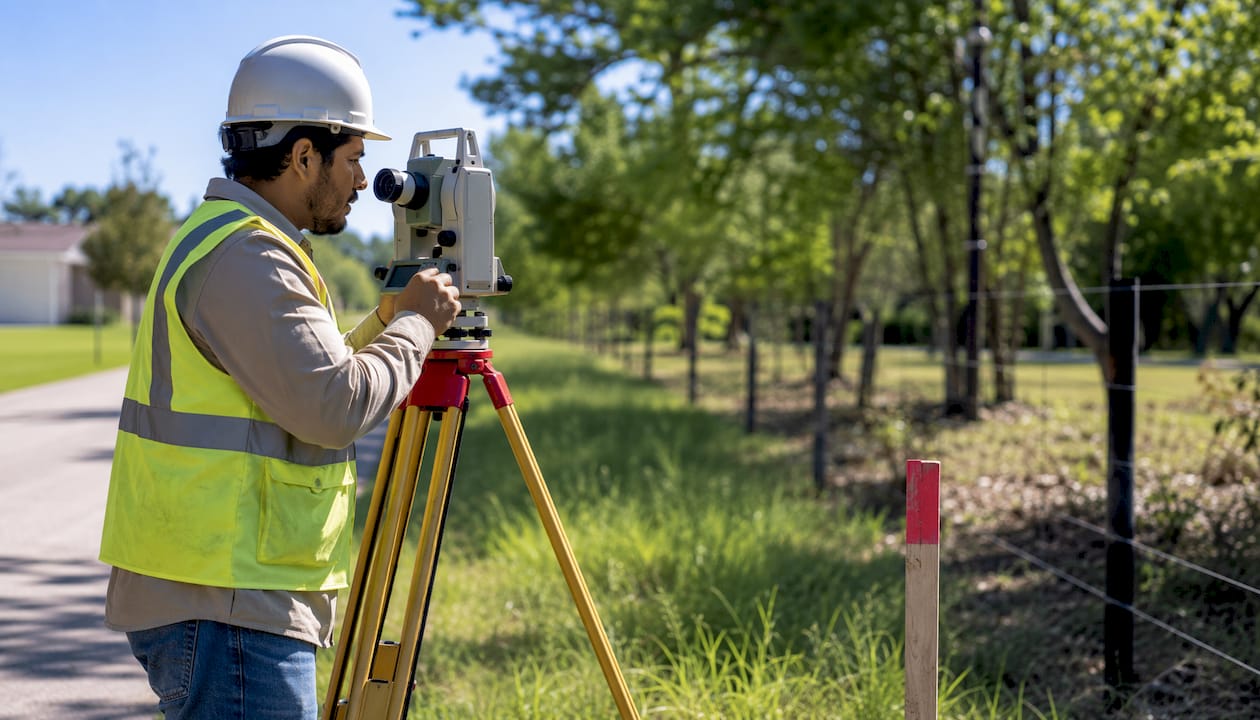
A professional land survey is the safest step before installing any fence near a boundary. Existing fence lines are not legal boundaries. Relying on assumed pins or a neighbor’s word creates real encroachment risk.
Arkansas is among the states that recognize a seven-year adverse possession period. If someone openly occupies land behind a fence for at least seven years, they may be able to claim legal ownership of that strip. The outcome depends on the specific facts and whether all statutory requirements are met. If you have any concern about a boundary dispute or adverse possession claim, consult a licensed attorney — this is not a situation to navigate without professional legal advice.
Documenting cost-sharing and maintenance responsibilities in writing before construction is one of the most effective ways to prevent neighbor disputes from escalating. A shadowbox or double-sided fence design also removes the “finished side” argument entirely, since both sides look the same.
Oklahoma comparison: fence-in vs. fence-out rules
Property owners near the Arkansas-Oklahoma border should understand that Oklahoma Statute Title 4, § 98 makes Oklahoma a “fence-in” (closed-range) state. Livestock owners are responsible for containing their animals at all times. That said, some western Oklahoma counties still operate under open-range principles, so the rule varies by county. If you own agricultural land near the state line, verify your county’s designation before assuming which party bears containment responsibility.
Key Takeaways
Arkansas fence rules are set locally, not by the state, making your city or county planning office the first and most important stop before any fence project.
| Point | Details |
|---|---|
| No statewide residential code | Cities and counties set height limits, setbacks, permits, and finished-side rules. |
| Call 811 before digging | Arkansas law requires utility notification before any excavation for fence posts. |
| Survey before you build | A professional land survey is the only defensible way to confirm a property line. |
| Oklahoma border owners | Oklahoma Statute Title 4, § 98 makes Oklahoma a fence-in state; verify your county’s rule. |
| Modernfence for local projects | Modernfence handles permitting coordination, 811 compliance, and licensed installation across Western Arkansas and Eastern Oklahoma. |
Modernfence makes the permit and installation process straightforward
Sorting through local ordinances, permit applications, and utility locates takes time most property owners don’t have. Modernfence brings over 70 years of licensed, insured installation experience across Western Arkansas and Eastern Oklahoma, which means we already know what Fort Smith, Fayetteville, and surrounding municipalities require before your project starts.
We handle on-site measurement, permit coordination, and 811 excavation compliance so you don’t have to chase down the paperwork yourself. Our material options cover wood, chain link, vinyl, and iron — each with clear tradeoffs on cost, maintenance, and longevity that we walk through with you during your estimate. As a family-owned company, we stand behind every project with a written scope and a clear timeline.
Ready to get started? Request a free estimate and we’ll confirm what your local code requires before a single post goes in the ground.